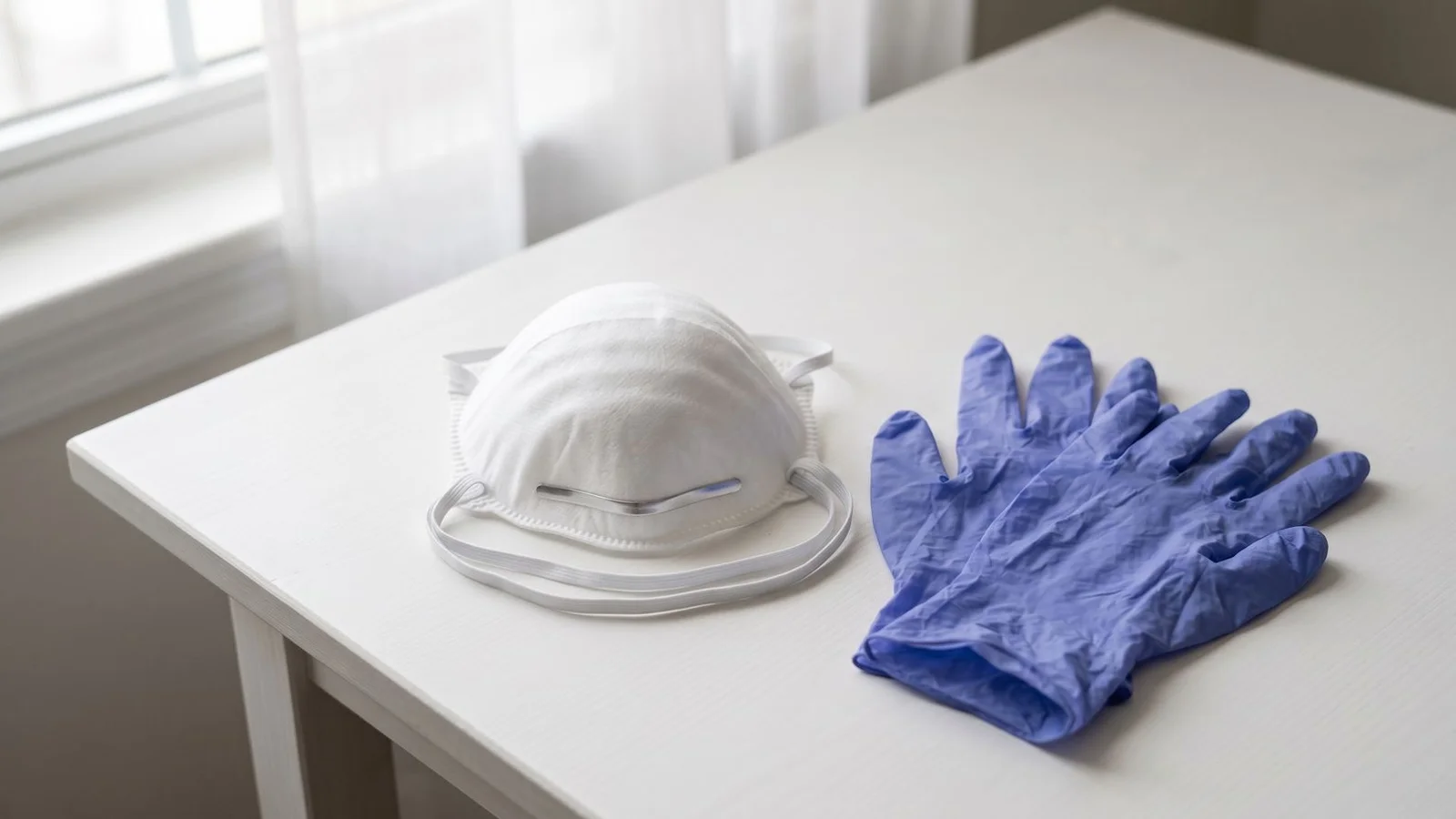
We see standard cleaning methods fail completely when applied to trauma or biohazard scenes. The protocols for this work shift dramatically from basic sanitation to strict compliance with safety regulations.
Homeowners and business owners need to know exactly what a properly executed biohazard cleanup safety, PPE, and sanitization process looks like. Our teams handle these intense situations daily across the US.
You can use this guide to understand the exact steps, equipment, and verification methods a certified provider must follow.
PPE Tiers
Our baseline for safety begins with the OSHA 29 CFR 1910.1030 Bloodborne Pathogens Standard. This federal regulation mandates a written exposure control plan and the exact protective gear required for biohazard cleanup PPE.
The contamination level dictates the specific tier required for the job. We never guess what level of protection a site needs.
- Tier 1 (light contamination, surface level): Nitrile gloves, eye protection, N95 respirator, and work boots with shoe covers.
- Tier 2 (moderate biohazard, decomposition residue): Tyvek suit, double-glove system, full-face N100/P100 respirator, and dedicated boots.
- Tier 3 (severe biohazard, active pathogen risk): Full Tyvek suit with sealed seams, supplied-air respirator, and a complete decontamination shower setup.
Safety mandates require crews to step up a tier if conditions change during the assessment. Wearing inadequate protection is simply never an option.
Our staff knows failing to follow these OSHA protocols risks severe health consequences and daily fines of up to $15,625. You must treat personal protective equipment as a strict law rather than a suggestion.
Containment Setup
Our technicians establish strict containment barriers before any active cleanup begins. A secure perimeter prevents airborne pathogens from spreading to unaffected areas of your property.
This setup phase can easily take one to two hours before the actual cleaning starts. We take the time to seal off the work zone completely.
- Polyethylene sheeting: Creates physical walls to isolate the work area.
- Negative pressure control: Uses HEPA-filtered exhaust to pull air inward.
- Dedicated access points: Features specific ingress and egress doors with PPE doffing stations.
- Equipment staging: Keeps tools organized securely outside the contaminated zone.
Specialized tools like a manometer help verify containment effectiveness. This device continuously monitors the air pressure differential between the rooms.
Our target is a constant pressure reading between -4 to -6 pascals for optimal safety. Continuous monitoring ensures contaminated air never drifts back into your living or working spaces.
HEPA Filtration and Air Quality
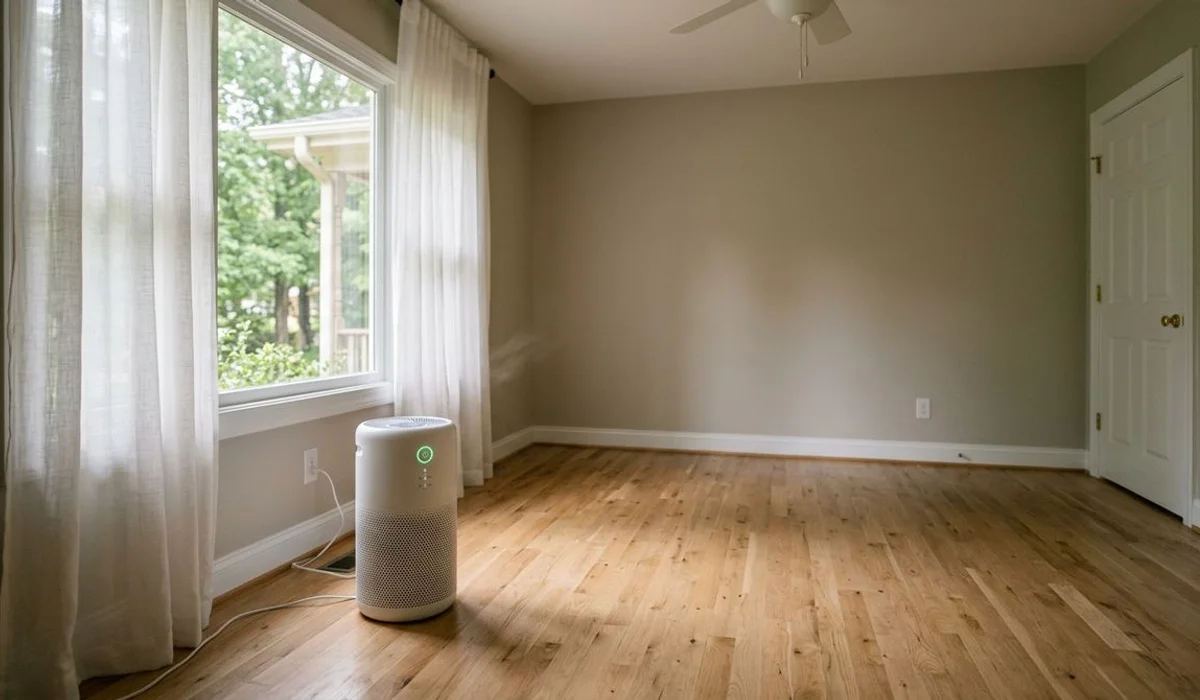
Our specialists run heavy-duty HEPA filtration systems continuously during the entire work and deodorization phases. High-efficiency particulate air scrubbers capture 99.97% of microscopic particles down to 0.3 microns.
The industry standard requires moving the air through the filters to achieve at least 4 to 6 air changes per hour. We calculate the exact cubic footage of the space to determine the precise equipment size needed.
Continuous Air Quality Monitoring
Advanced air quality monitoring devices track particulate matter and volatile organic compounds in real time. Property owners need this data to prove the indoor environment is safe to breathe again.
Our post-clearance documentation always includes these verified air quality readings for severe biohazard scopes. Precise metrics guarantee the physical work meets strict safety standards.
EPA-Registered Disinfectants
Our sanitization protocol relies heavily on specific products approved by the federal government. The Environmental Protection Agency maintains List S and List D to track antimicrobial products proven effective against bloodborne pathogens like HIV and Hepatitis B.
Using household cleaning supplies is ineffective and dangerous in these scenarios. We select the exact chemical needed based on the specific biohazard sanitization process required.
Common commercial choices include the following options. Efficacy relies on matching the right solution to the specific biological threat.
- Quaternary ammonium compounds for general biohazard surfaces.
- Hydrogen peroxide-based solutions for sensitive surfaces and odor control.
- Sodium hypochlorite (bleach) mixtures for highly specific and severe scenarios.
Our technicians pay close attention to a critical metric known as contact time. This number indicates exactly how long a surface must remain visibly wet with the disinfectant to destroy the target pathogen.
These strict time limits guarantee complete eradication of the pathogen. We monitor these dwell times carefully to ensure no microscopic threats survive.
| Pathogen Target | Required Disinfectant Type | Typical Contact Time |
|---|---|---|
| Standard Enveloped Viruses | Quaternary Ammonium | 1 to 3 minutes |
| Bloodborne Pathogens (HIV/HBV) | EPA List S Approved | 5 to 10 minutes |
| Severe Bacterial Spores | Sodium Hypochlorite | 10+ minutes |
Regulated Waste Disposal
Our teams must handle the disposal of contaminated materials according to strict federal laws. Biohazard waste cannot legally go into your regular municipal trash bins.
The US Department of Transportation strictly regulates the shipping and labeling of this infectious waste. We package all porous materials and debris into sealed, leak-proof red bags and designated containers.
The Importance of Proper Documentation
Proper chain-of-custody manifests provide a paper trail proving you handled the situation legally. Facilities face massive DOT fines of up to $83,439 per day for improper packaging or illegal dumping.
Our company partners exclusively with licensed medical-waste haulers to transport these containers to approved incineration facilities. You receive copies of all disposal records for personal or corporate files.
Post-Clearance Verification
Our supervisors verify the physical cleanliness of a space using scientific testing methods before declaring the job complete. Most certified biohazard providers across the country offer detailed post-clearance documentation to protect property owners.
The verification phase separates a basic wipedown from a true hospital-grade sanitation result. We conduct thorough surface testing to prove the environment is fully decontaminated.
- ATP swab testing: Uses a luminometer to measure organic cellular matter in Relative Light Units (RLU).
- Visual inspection: Provides a documented walkthrough to ensure no visible residue remains.
- Air quality readings: Compares before and after particulate levels to confirm clean indoor air.
- Written summary: Serves as legal proof for insurance claims, real estate disclosures, or probate inventories.
ATP testing provides objective data regarding surface safety. An RLU score below 100 generally indicates a clean surface, though food-contact areas require scores under 30.
Our primary goal is to achieve testing results as close to zero as possible. This final documentation step gives families and businesses the confidence to reoccupy the space safely.
Our experts understand that managing a contamination event is an overwhelming responsibility. Professional remediation protects your property value and shields occupants from invisible health hazards.
You should always rely on verifiable facts and certified processes when health is on the line. We are ready to answer your questions and guide you through the next phases of recovery.
For threshold guidance on when this scope applies, see what counts as biohazard cleanup, or visit biohazard cleanup coordination to request immediate assistance.