
Our teams have seen the clear line where standard clutter turns into a dangerous environment. From what I have witnessed on the job, that transition point is crucial for property managers and families to recognize early. Gross filth cleanup hoarding situations require a completely different approach than basic decluttering. We often step in when the air quality drops or the floorboards start to give way. Ignoring these signs puts everyone at risk. Let us walk through the exact physical indicators of a biohazard site and how to handle the transition to specialized care.
Visual and Olfactory Cues
Our technicians look for specific environmental markers to determine the true scope of the contamination. A sustained odor or visible mold means the space requires specialized decontamination. When hoarding becomes biohazard, standard cleaning supplies simply mask the danger instead of removing it. We follow Environmental Protection Agency (EPA) protocols for treating porous materials soaked in biological waste. Ammonia buildup from human or animal urine is a common hazard that demands commercial-grade neutralizing agents. Severe cases present obvious visual warnings.
- Sustained odor that does not respond to ventilation or surface cleaning
- Visible biological contamination on floors, walls, or furniture
- Discoloration patterns on flooring or baseboards suggesting saturation
- Insect activity on items rather than just around the perimeter
- Visible Black mold (Stachybotrys chartarum) on multiple surfaces, not just one corner
Structural Integrity Flags
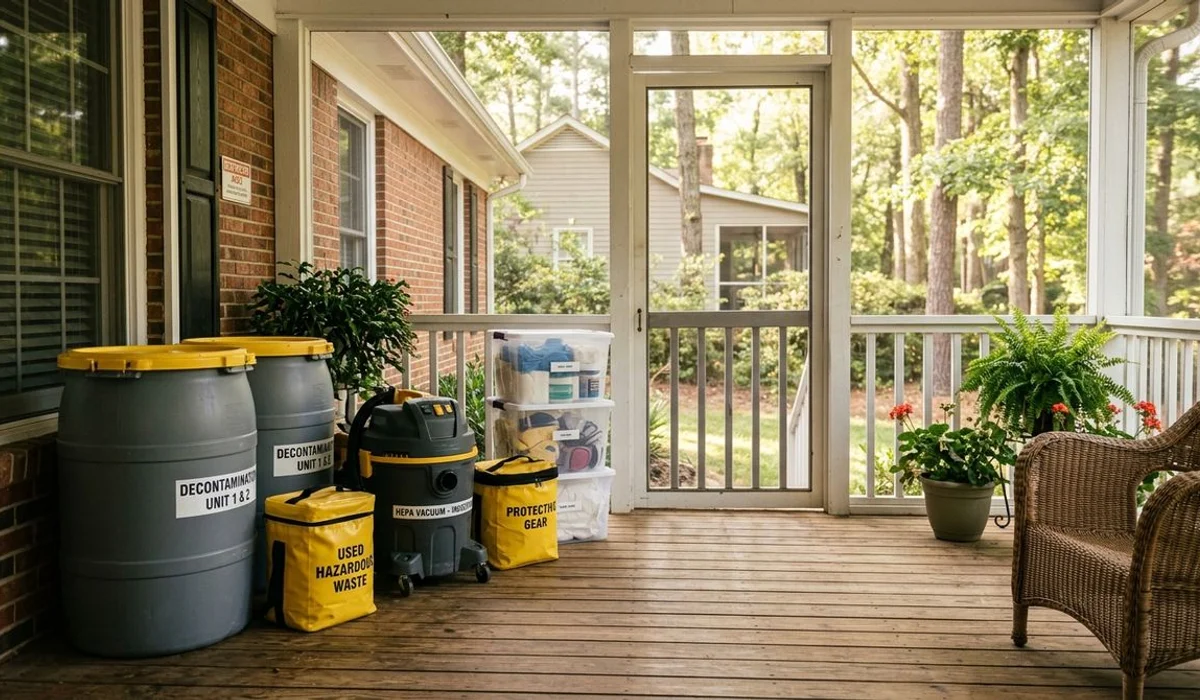
Our crews frequently encounter rooms holding thousands of pounds of compressed material. Sagging floors and stained drywall are immediate signs that the building structure is compromised. Heavy accumulations of wet trash and debris easily push a house past its safe limits. We prioritize stabilizing the environment before any major removal begins. Modern US residential building codes require a floor to support a live load of 40 pounds per square foot. Stacks of rotting magazines or waterlogged clothing routinely exceed this structural capacity.
- Floor sag or soft spots indicating subfloor compromise
- Drywall staining in patterns suggesting moisture migration
- HVAC components visibly contaminated
- Plumbing fixture areas showing leak history beyond the surface
- Ceiling stains or visible roof damage from accumulated weight
Pest Indicators That Change Scope
We treat severe rodent activity as a major health crisis rather than a simple exterminator call. Active rodent colonies inside living areas require immediate biohazard intervention. Surface wiping will not fix the deep contamination left behind by massive pest infestations. Our decontamination protocol involves soaking the area with an EPA-registered disinfectant for a mandatory five-minute dwell time. The US Centers for Disease Control and Prevention (CDC) warns that deer mice droppings can transmit the deadly Hantavirus. Sweeping or vacuuming dry feces is extremely dangerous because it pushes virus-laden dust directly into the air.
Pest Remediation Tactics
| Threat Indicator | Common Hazard | Required Action |
|---|---|---|
| Large dropping clusters | Hantavirus risk | Soak with EPA-registered disinfectant |
| Active roach colonies | Asthma triggers | Deep sanitize porous materials |
| Rodent nesting in walls | Structural damage | Remove contaminated insulation safely |
When Standard Hoarding Cleanup Is No Longer Safe
We train the compassionate Carolinas providers to recognize the exact moment a site becomes hazardous. Work must stop immediately if the air quality poses a risk or if structural materials require complete removal. Pushing through a severely compromised job site endangers both the workers and the property owners. Our teams switch to N95 or N100 respirators when the environment degrades. The Occupational Safety and Health Administration (OSHA) mandates specific Bloodborne Pathogens standards (29 CFR 1910.1030) for spaces containing bodily fluids. Regular dust masks offer zero protection against aerosolized bacteria or mold spores.
- PPE requirements exceed standard work gear
- Subfloor or structural materials need replacement, not cleaning
- Containment is needed to prevent cross-contamination during work
- Decomposition or extensive animal-waste residue is present
- Air quality is compromised in ways that affect worker safety
Our recommendation for any of these situations is to hire a biohazard-trained crew with proper PPE and process protocols.
What the Handoff Looks Like
A safe handoff happens by pausing the initial work and immediately calling the intake team. The transition usually takes 24 to 48 hours to complete. We coordinate the logistics so the family does not have to restart the entire process from zero. The biohazard provider picks up exactly where the standard crew stopped. Creating strict containment zones using 6-mil poly sheeting is usually the first step to protect the unaffected rooms. Our specialists also use Adenosine Triphosphate (ATP) testing meters to scientifically verify that all surfaces are truly sanitized.
Key Handoff Steps:
- Immediate work pause to reassess hazards
- Rapid intake team coordination within 48 hours
- Isolation of contaminated zones with poly sheeting
- ATP testing to establish a baseline for sanitization
Insurance Implications
Biohazard coding often secures homeowner insurance coverage that standard decluttering jobs never receive. Proper classification can significantly change what your carrier reimburses for the cleanup. We help clients manage these complex conversations with their insurance adjusters. Standard US HO-3 policies typically view gradual hoarding as a maintenance issue and deny direct claims. A sudden covered peril, like a burst pipe creating category 3 black water within the hoard, changes the situation entirely. Our intake team helps you document the specific damage that qualifies for a claim.
Common Insurance Triggers:
- Sudden water damage causing mold or black water contamination
- Unattended death requiring professional pathogen removal
- Crime scene incidents leading to biohazard conditions
- Fire damage involving heavily accumulated materials
For the full PPE and sanitization protocol, see biohazard cleanup safety, PPE, and process, or visit biohazard cleanup coordination. Professional assistance is the best way to handle gross filth cleanup hoarding safely.
We encourage you to reach out for an expert assessment today.