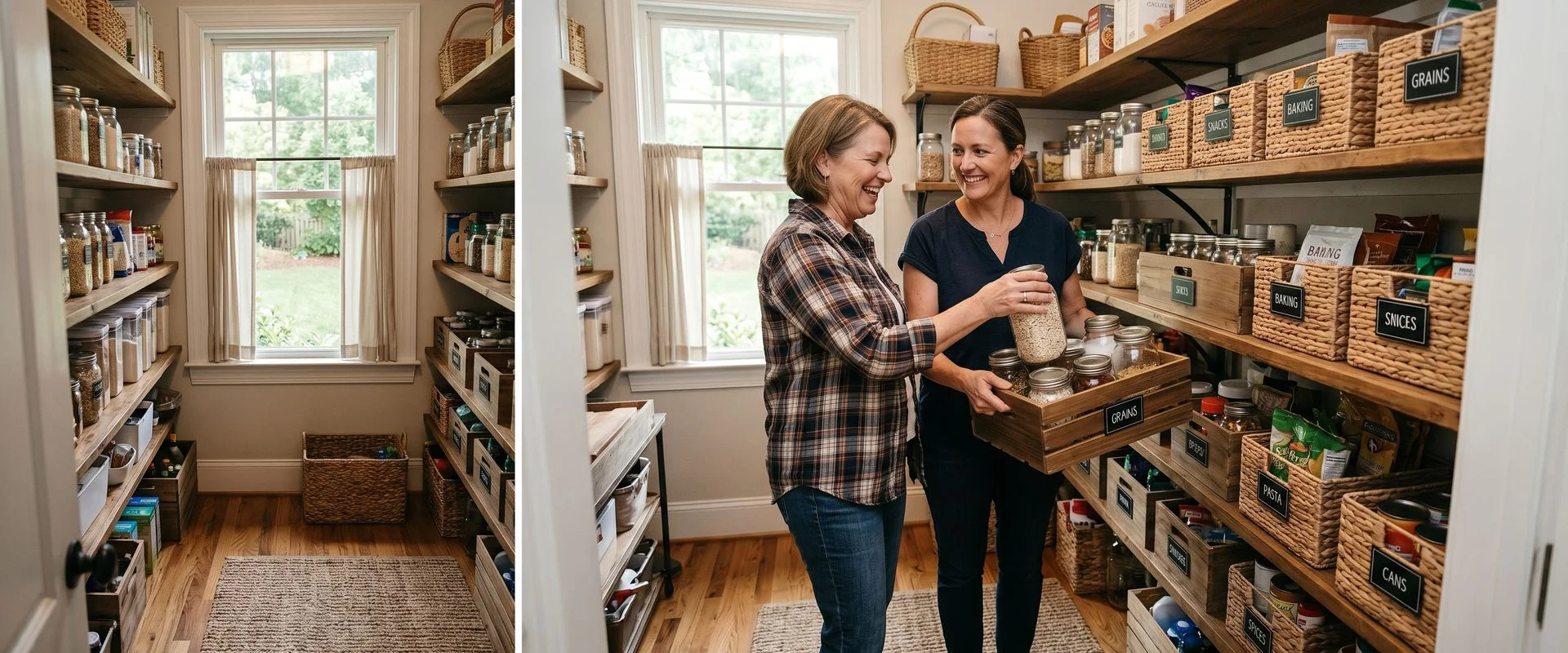
Compassionate Professional Organizers Across NC & SC
Long-term, compassionate organizing referrals — relapse prevention after a hoarding cleanup, ongoing maintenance after a downsizing.
100% Confidential. We typically respond within 24–48 hours on weekdays. No judgment, no pressure.
Does Any of This Sound Like Your Situation?
The cleanup is done, but you're worried things will slowly drift back to where they were six months ago.
Your loved one needs ongoing support from someone patient and consistent — not another one-time fix.
Standard organizers haven't worked. They don't understand hoarding behavior or how to pace these engagements.
Therapy is involved, and any organizing support needs to coordinate with the clinical plan, not compete with it.
You don't need to have it all figured out before you call. One conversation is usually enough to know what comes next.

Have you ever wondered what happens after a major house cleanup is finally finished? It feels like a massive relief. We know the cleanup itself is the visible and urgent piece of the puzzle. The right professional organizing referrals are the quiet secret to keeping a home livable for years.
Professional organizing is one of the most underrated forms of relapse prevention after a hoarding cleanup when done well. Carolina Hoarding Cleanup points families and individuals across North Carolina and South Carolina to compassionate organizers trained for recurrence prevention.
Getting matched with the correct expert makes all the difference for long-term success. We do not send clients to organizers who just do magazine-style closet makeovers.
Those services require different training and a completely different posture. Our team connects you with practitioners who understand hoarding behavior, trauma-informed practice, and the slow rhythm of household maintenance.
Who Benefits Most
Many different types of people need a helping hand to keep their spaces safe and functional. Hoarding disorder affects about 2.6% of adults in the US right now.
You might be surprised to learn how common this struggle really is. We see a wide variety of clients who thrive with ongoing support.
A 2025 US News survey found that 94% of adults aged 55 and older say aging in place is an important goal. Only 10% of US homes actually have the accessibility features needed to support that goal.
Our matched professionals help bridge that gap. Here is a look at who gets the most out of these services:
- Post-hoarding-cleanup households wanting to prevent a recurrence of clutter.
- Seniors aging in place who need light and ongoing organizational support to stay safe.
- Families of someone with hoarding tendencies who want a friendly third-party check-in.
- People in therapy for hoarding disorder whose therapist has recommended a parallel practical engagement.
What Recurring Engagement Looks Like
A typical post-cleanup engagement starts with weekly visits for the first month. This initial phase is just long enough to build a reliable household system.
Monthly maintenance visits keep the system honest after that first month. Some long-term clients eventually shift to quarterly check-ins once they feel confident.
We often remind clients that the cadence matters more than the duration of any individual session. Showing up reliably prevents the slow accumulation that leads right back to the original situation.
“Consistency is the single most important tool for maintaining a safe and organized home after a major cleanup.”
Studies show that between 20% and 50% of individuals relapse after a major hoarding cleanup without ongoing support. Our professional network uses proven maintenance tactics to stop that cycle.
The popular “one in, one out” method is a great example of a simple rule that stops clutter from piling up again. Here is a quick breakdown of how the scheduling usually works:
| Visit Cadence | Timeline | Main Goal |
|---|---|---|
| Weekly | First Month | Establish basic routines and clear zones. |
| Monthly | Months 2 to 6 | Maintain progress and practice the “one in, one out” rule. |
| Quarterly | Long-term | Provide a gentle accountability check-in. |
Why Trauma-Informed Practice Matters
A trauma-informed organizer does not lead with judgment. They never push past the homeowner’s pace or make decisions on the homeowner’s behalf.
We make sure our recommended pros build the systems alongside the person. The homeowner’s agency remains intact at every single step.
Addressing Underlying Challenges
Research shows that about 75% of people with hoarding challenges also manage a co-occurring mental health condition like anxiety or a mood disorder. That statistic is exactly why a gentle approach is so vital.
Our partners follow the ethical guidelines set by the National Association of Productivity and Organizing Professionals (NAPO). Many also hold specific certificates from the Institute for Challenging Disorganization (ICD) in the US.
Building Sustainable Systems
That collaborative posture makes the engagement sustainable for the long haul. You need someone who listens and respects your boundaries.
We prioritize organizers who know how to celebrate small wins. This encouragement turns a stressful chore into a positive healing process.
Finding Professional Organizing Referrals
Finding the right fit for your home takes a little patience. A clean house is a wonderful thing to enjoy every day.
We are ready to help you find the perfect match for your specific needs. Getting solid professional organizing referrals is the best way to protect your peace of mind.
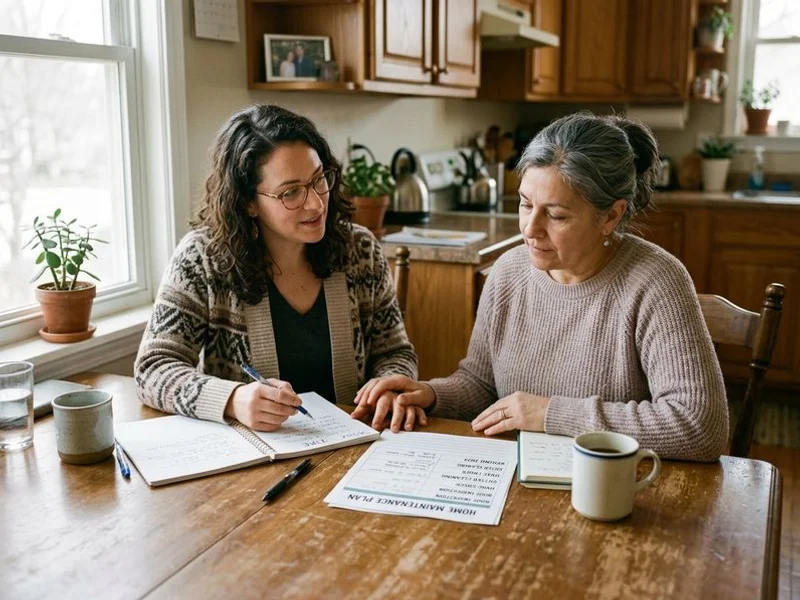
Give us a call today to discuss your home maintenance plan.
The work doesn't end when the cleanup truck pulls away. Long-term organizing — household systems, family check-ins, regular maintenance — is what prevents recurrence. Carolina Hoarding Cleanup refers you to compassionate, hoarding-trained organizers across the Carolinas who treat the engagement as relapse prevention, not luxury maintenance.

What's Included
- Hoarding-trained organizers (ICD-credentialed where available)
- Trauma-informed, judgment-free approach
- Recurring maintenance models
- Coordination with therapists and family members
How It Works
- 1
Family conversation
We talk through the situation, post-cleanup status (if applicable), and what success looks like — daily livability, not magazine-perfect.
- 2
Organizer match
We refer to a Carolinas organizer trained for the situation — hoarding-aware, senior-care-aware, or trauma-informed depending on the case.
- 3
Initial sessions
The organizer meets the homeowner, builds the household systems, and establishes a maintenance cadence.
- 4
Ongoing check-ins
Recurring visits (weekly, monthly, quarterly) keep systems in place. Family members can be looped in if helpful.
Why Families Choose This Path
Hoarding-trained, not luxury
We refer to organizers who specialize in hoarding recurrence prevention — not pinterest-style closet projects.
Trauma-informed
The organizer's posture matters. Our network is built around compassionate, judgment-free practitioners.
Therapist coordination
When therapy is part of the picture, our organizers can coordinate without overstepping clinical boundaries.
Family-friendly cadence
Recurring visits work best when they fit family rhythms. We help structure the cadence.
Need a Vetted Provider? No Commitment Required.
We are a referral and resource platform — we do the intake, match you with one independent local provider, and step back. No phone calls, no obligation. Submit the confidential intake form and we will route your request to a screened provider who handles complicated situations, urgent timelines, and out-of-state coordination every day.
100% Confidential. We typically respond within 24–48 hours on weekdays.
What "Done Right" Actually Looks Like
Cleanup is private work, so we don't publish client testimonials. Here are the concrete safeguards you can verify before you reach out.
Credentialed Network
Every matched provider carries active general liability insurance and at minimum one of: IICRC certification, OSHA Bloodborne Pathogens training, or NASMM move-management credentials. We share proof of insurance on request.
Independent Provider Model
Cleanup is performed by independent local providers. We are a referral and resource platform — we don't perform the work and don't warrant pricing, timelines, or outcomes. Scope, schedule, and price are agreed directly with the matched provider.
Privacy-First Operations
Intake is confidential, crews arrive in unmarked vehicles on request, and your information is shared with exactly one matched provider — never a lead-generation list or directory.
Organizing — Common Questions
Why do I need an organizer after a cleanup?
Hoarding recurrence is real. The cleanup addresses the symptom; ongoing organizing addresses the system. Recurring check-ins prevent the slow buildup that leads back to the original situation.
Are these organizers different from regular professional organizers?
Yes — we refer to hoarding-trained or trauma-informed practitioners, often ICD-credentialed (Institute for Challenging Disorganization). Their training is specifically for recurrence prevention, not aesthetic optimization.
Can the organizer work with a therapist?
Yes, when both parties agree. Many of our organizers coordinate with therapists for clients in active treatment, staying in their lane while sharing relevant practical observations.
How often do sessions usually happen?
It varies. Weekly sessions are common immediately post-cleanup; monthly maintenance is common after the system is established; quarterly check-ins for steady maintenance long-term.
Related Organizing Guides
In-depth answers to the questions families ask before they call.
What to Look for in a Compassionate Professional Organizer
Pick a compassionate, hoarding-trained organizer in NC or SC — ICD credentials, trauma-informed approach, references, pricing models, and fit.
Read guide → Decision SupportWhy Long-Term Organizing Matters After Hoarding Cleanup
Long-term organizing as relapse prevention after a hoarding cleanup — household systems, family check-ins, and therapist coordination.
Read guide →Related Cleanup Services
Senior Downsizing & Transition Services
Sort-with-dignity downsizing and move-out cleanup for adult children and senior-care coordinators.
Learn more →Deep Cleaning & Sanitization
Restoration-grade cleaning, odor remediation, and air-quality work — separate from a standard maid service.
Learn more →Need a Vetted Carolinas Provider?
We do the intake and refer you to one independent local provider — no phone calls, no obligation. Submit the confidential intake form and we will route your request to a screened provider in your area.