
We have seen it happen far too often in our line of work. The cleanup truck pulls away, the home is finally restored, and the family exhales a collective sigh of relief.
But without ongoing support, that slow accumulation almost always begins again.
This critical post-cleanup phase is exactly what separates a temporary fix from a permanent transformation. Our team knows that organizing after hoarding cleanup is not just a luxury service.
It acts as the necessary relapse prevention layer for households and business owners managing the aftermath of a major cleanout. Let us look at the actual data behind re-accumulation, the systems that work, and the specific cadence of support needed to keep a property safe.
Recurrence Statistics in Plain Language
We always emphasize the hard numbers because they reveal the true scope of the challenge. Without structured maintenance, the US hoarding recidivism rate approaches a staggering 100 percent within just a few months. This specific data highlights why forced cleanouts alone consistently fail. Our organizers see meaningful relapse within 12 to 24 months if the client does not receive cognitive behavioral therapy or consistent follow-up.
Structured organizing engagement changes this trajectory completely. The mechanism behind this success is entirely unsurprising. Hoarding behavior takes years to develop, and it certainly does not disappear after a one-week cleanup project. We rely on ongoing systems and accountability to address those deeply ingrained habits.
| Intervention Approach | Typical 12-Month Outcome |
|---|---|
| One-Time Cleanup (No Support) | Near 100% relapse rate |
| Cleanup + Monthly Organizing | Significant reduction in clutter accumulation |
| Cleanup + Organizing + CBT | Highest long-term success and symptom management |
Household Systems That Prevent Re-Clutter
We build practical, property-specific systems rather than relying on generic advice. Compassionate organizers use proven frameworks to maintain the space. For example, utilizing the Clutter Image Rating scale from the International OCD Foundation provides an objective visual baseline for US homes. Our clients use this 1-to-9 visual scale to notice when a room creeps up to a level 4, triggering an immediate reset.
Whether managing a residential household or a commercial backroom, these customized systems directly address the areas most prone to accumulation:
- The One-in-One-Out Rule: A strict boundary for high-risk categories like clothing or books.
- The Modified Four-Box Method: Daily sorting using designated bins for Keep, Donate, Trash, and Relocate.
- Designated Drop Zones: Specific landing pads for incoming mail, Amazon packages, and school paperwork.
- Weekly Clearing Rhythms: Scheduled resets for flat surfaces like kitchen counters and dining tables.
- Quarterly Category Reviews: Deep dives into storage areas like the garage or basement.
We know these strategies work because they are built around the specific patterns the client exhibited before the cleanup.
Family Check-In Cadence
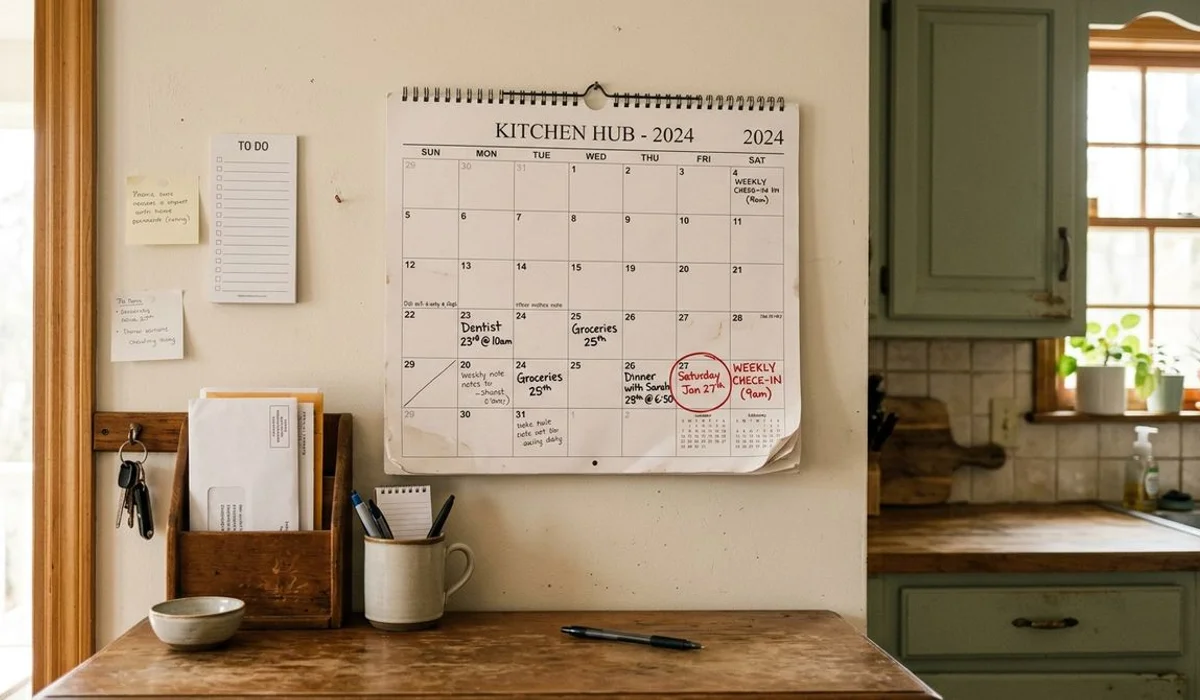
We strongly advocate for a structured family check-in rhythm when adult children are involved in the recovery process. Establishing a predictable cadence prevents the homeowner from feeling overwhelmed or micromanaged. The focus must remain on harm reduction and emotional support rather than achieving aesthetic perfection. Our standard recommendation follows a phased approach to gradually build independence:
- Weekly 15-Minute Calls: Short, focused conversations during the first month post-cleanup to celebrate small wins.
- Monthly On-Site Visits: Physical walkthroughs for the first six months to help with heavier tasks.
- Quarterly Maintenance Checks: Long-term check-ins scheduled after the initial systems hold steady.
These scheduled check-ins are not surprise inspections. They act as a supportive presence that keeps the individual moving forward. We find this relational structure keeps the property owner feeling supported instead of judged.
Working With a Therapist Alongside an Organizer
Our organizers frequently collaborate with mental health professionals to ensure the best possible outcome. When a homeowner engages in active treatment for hoarding disorder, aligning the practical organizing with clinical therapy is crucial. Current clinical guidelines highlight that Cognitive Behavioral Therapy serves as the gold-standard treatment, typically involving 20 to 26 weeks of targeted sessions. We focus entirely on the physical environment while the therapist addresses the underlying psychological triggers.
“Successful hoarding recovery requires a dual approach: clinical therapy to rewire the brain and practical organizing to reclaim the physical space.”
The professional organizer does not make clinical diagnoses or manage medications. The therapist, conversely, does not build household sorting systems or haul away donations. Our team finds that a shared awareness of the client’s behavioral patterns dramatically improves the effectiveness of both interventions. Most professionals in our network gladly coordinate with licensed therapists when all parties agree to the collaboration.
How Long Ongoing Engagement Typically Lasts
We often hear clients ask when they will be completely finished with the post hoarding organizing process. The truth is that establishing new habits takes significant time. Clinical evidence suggests that individuals with chronic disorganization often require 12 to 18 months of extended support to rewire their decision-making skills. Our engagements are carefully structured to slowly taper off as the client gains confidence.
A typical recovery timeline moves through three distinct phases of engagement:
- Months 1 to 2: Weekly visits focused on building initial sorting systems and establishing trust.
- Months 3 to 6: Monthly visits dedicated to maintaining those systems and tackling seasonal items.
- Months 7 and Beyond: Quarterly visits serving as long-term accountability and adjustment periods.
We see some households confidently step away from professional organizing after the first year as their systems become completely self-sustaining. Other families choose to maintain quarterly visits for several years as a preventative measure. Both scenarios are entirely normal and represent a successful hoarding relapse prevention strategy.
For organizer selection guidance, see what to look for in a compassionate organizer, or visit professional organizing referrals.