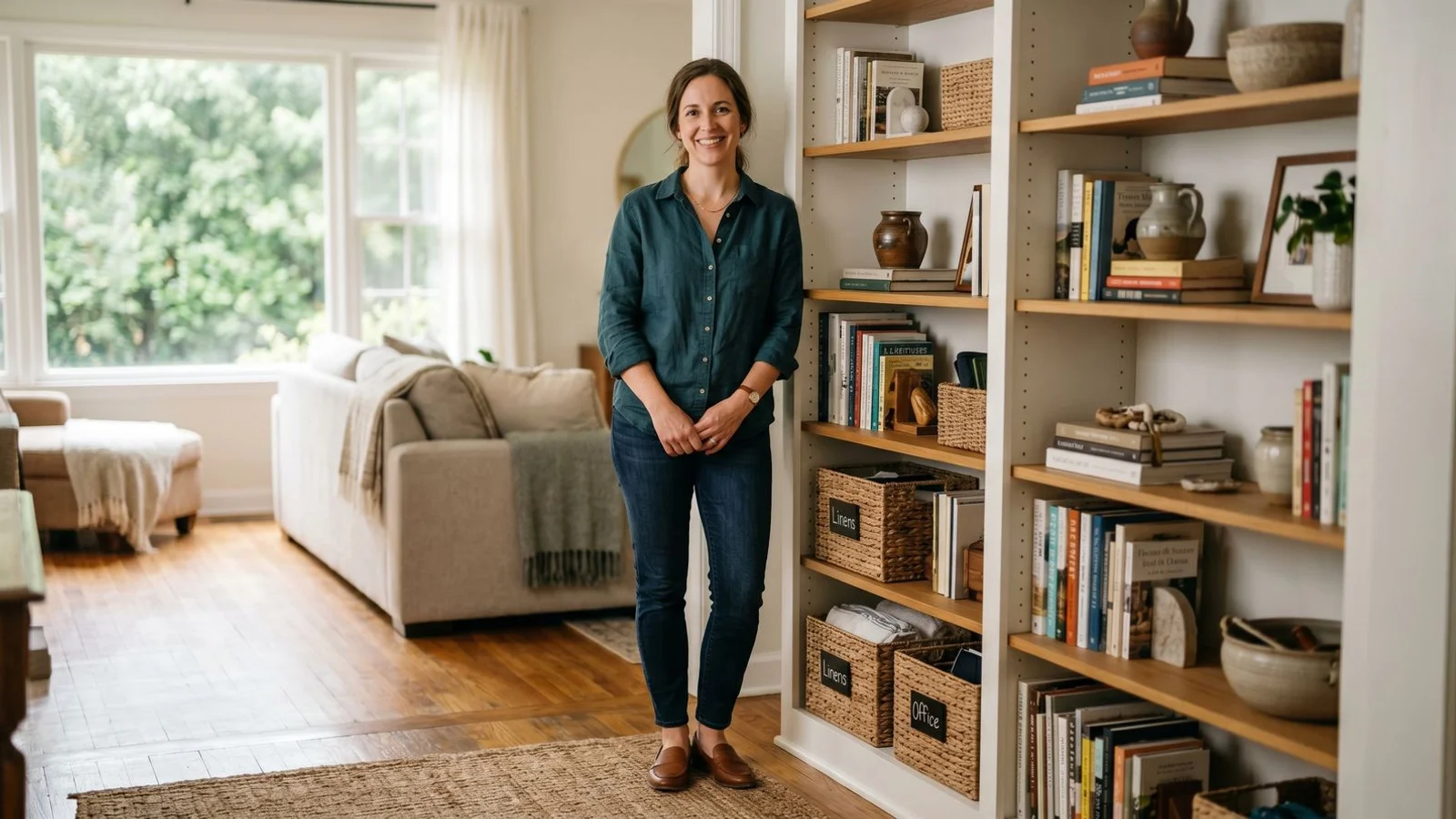
We see the exhaustion families face when an organizing project falls apart after just a few weeks. A quick aesthetic fix simply does not work for properties recovering from chronic disorganization. The standard approach fails because the root causes of the clutter remain unaddressed.
This is exactly why specialized training matters so much.
Our professional service team focuses heavily on finding an ICD organizer in the Carolinas trained specifically for these exact environments. You need someone who understands the cognitive patterns behind the belongings. Let us outline the specific credentials to verify, the practical techniques to expect, and the exact questions to ask during your consultation.
Hoarding-Trained Credentials
We look straight to the Institute for Challenging Disorganization (ICD) when vetting candidates for severe hoarding cases. This specific certification proves the practitioner understands the realities of chronic disorganization. An estimated 2.5 percent of the population, and up to 6 percent of older adults, manage hoarding behaviors based on 2026 clinical data from the Mind Study Center.
Our experts appreciate that certified ICD organizers utilize objective tools like the Clutter-Hoarding Scale. This five-level safety and risk assessment metric helps professionals measure the severity of a home objectively instead of relying on personal opinions.
The ICD credential signals trained awareness of:
- Cognitive and emotional patterns underlying hoarding behavior
- Decision-making frameworks for ambiguous items
- Family dynamics in hoarding-affected households
- When to coordinate with mental-health professionals
We also look for practitioners certified by the National Association of Productivity and Organizing Professionals (NAPO) for general competence. Another excellent benchmark is the National Association of Senior Move Managers (NASMM) for senior-transition work.
Trauma-Informed Approach in Practice
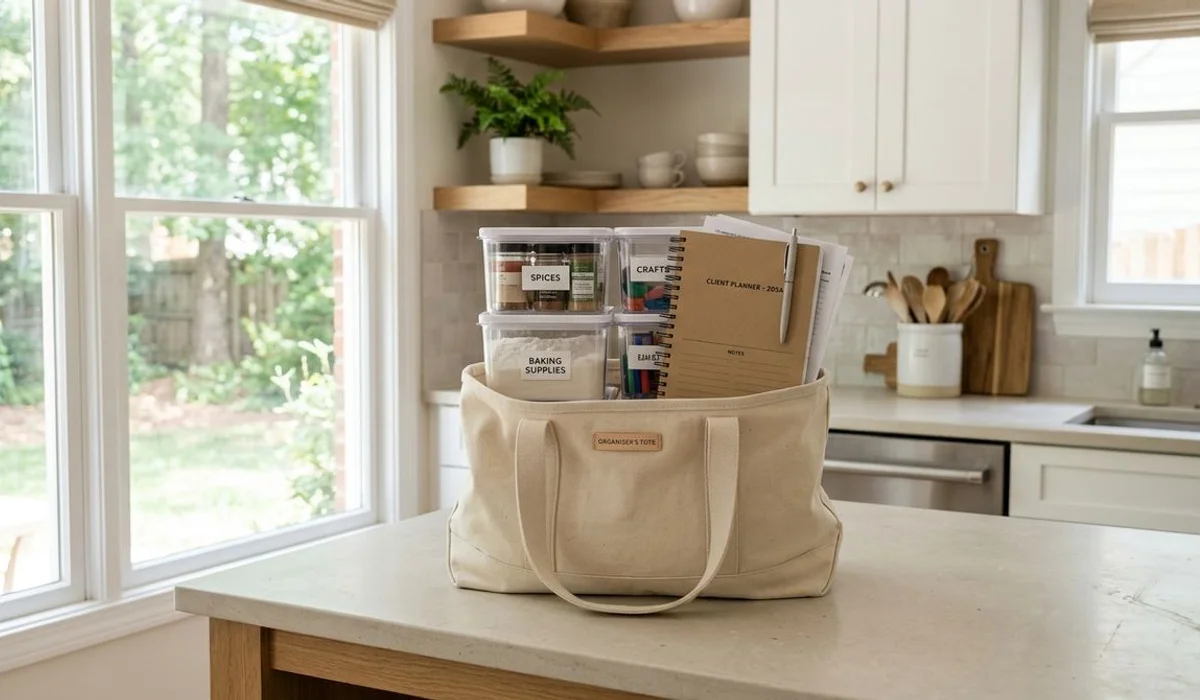
We consider a trauma-informed approach to be the absolute foundation of sustainable organizing. A qualified trauma informed organizer in NC will actively manage emotional triggers rather than just tossing items into trash bags.
Recent 2026 organizational strategies highlight that clutter is often linked directly to anxiety, grief, or post-traumatic stress. Our preferred specialists integrate grounding exercises into their sessions to calm the nervous system when a homeowner feels overwhelmed. Short, focused blocks of work yield much better results than exhausting marathon sessions.
Trauma-informed organizers consistently:
- Don’t lead with judgment about the household’s prior state
- Don’t push past the homeowner’s pace, even when it is slow
- Don’t make decisions on the homeowner’s behalf
- Build agency rather than replacing it
- Use specific, neutral language rather than emotionally loaded framing
- Pause when the homeowner is overwhelmed rather than pressing through
We notice that organizers who lack this posture usually get a quick visual win that fails to hold. This psychological awareness matters enormously for long-term sustainability.
What to Ask for in References
You must ask highly specific questions during reference checks to gauge an organizer’s actual capacity for hoarding cases. We recommend focusing your conversation on conflict resolution and long-term recurrence prevention. General reviews on platforms like Google rarely reveal how a professional handles a mid-session panic attack.
| Essential Reference Question | The Ideal Answer to Listen For |
|---|---|
| ”Have you worked with hoarding-spectrum clients before?” | A clear “yes” followed by a specific explanation of how they structure the sessions. |
| ”How do you handle disagreements about what to keep?” | A homeowner-led process prioritizing patience and non-judgmental guidance. |
| ”Do you coordinate with therapists?” | Complete openness to a collaborative care team approach without gatekeeping. |
| ”Can you describe a long-term engagement that worked?” | Proven strategies for sustained recurrence prevention and gradual habit building. |
We find that the best professionals welcome these pointed questions enthusiastically. Open communication about clinical coordination proves the organizer understands their exact role in the larger recovery process.
Pricing Models
The financial commitment for a compassionate professional organizer in the Carolinas typically falls between $50 and $150 per hour based on 2026 data. Our team advises clients to explore retainer models for substantial savings on post-cleanup maintenance. Specialized skills like hoarding remediation frequently command rates toward the higher end of that spectrum, occasionally reaching $200 per hour for advanced clinical expertise.
We often see the best results when clients commit to ongoing support rather than a single massive cleanout. Understanding the standard fee structures helps you accurately budget for recurring help.
- Hourly: most common, typically $60 to $120 in Carolinas markets for standard work.
- Session packages: discounted blocks of hours (10, 20, 50).
- Monthly retainer: for steady recurring engagement.
- Project-based: less common for ongoing organizing work due to the unpredictability of hoarding cases.
We strongly encourage establishing a clear written agreement detailing any travel fees before the work begins. For post-cleanup recurring engagement, package or retainer pricing often reduces the effective hourly rate.
Fit for the Specific Household
A mismatch in personality will easily ruin the progress of a highly credentialed organizing project. We urge property owners to treat the initial consultation as an essential interpersonal chemistry test. The practitioner will spend hours side-by-side with you in highly vulnerable spaces.
Our team notices that a highly energetic, fast-talking professional might completely overwhelm an anxious senior. You must assess whether the organizer’s energy level matches the homeowner’s temperament.
Beyond credentials and pricing, fit matters:
- Does the organizer’s style match the homeowner’s temperament?
- Can the family work alongside the organizer without feeling rushed?
- Does the schedule fit the family’s daily rhythm?
- Is there mutual respect evident from the very first conversation?
We consider a complimentary 30-minute consultation the industry standard for determining this crucial alignment. These subtle relational dynamics cannot be evaluated from a credential, as they only surface in the initial conversation.
Our Vetting Criteria
We rigorously filter the professionals in our network to guarantee they possess specific technical and emotional competencies. Every candidate must meet strict standards for specialized education and demonstrated compassionate care.
We refer exclusively to organizers in our Carolinas network who satisfy the following baseline requirements. Connecting a vulnerable family with an untrained practitioner often causes significant emotional distress.
- ICD or equivalent training (or demonstrated hoarding-spectrum experience)
- Trauma-informed practice as the default posture
- Compassionate references from past hoarding-spectrum clients
- Willingness to coordinate with therapists when appropriate
We recognize the immense value of sustained, professional support. For the broader case for ongoing organizing, see why long-term organizing matters after a hoarding cleanup. You can also visit our professional organizing referrals to find vetted help in your specific area.