We see the fallout constantly when property owners expect standard cleaners to fix severe contamination. The phrase “deep cleaning” gets used to mean a lot of different things, from a thorough spring cleaning to full hazard removal.
Our teams know that genuine restoration grade deep cleaning is an entirely different category.
It requires specific capital-intensive equipment, regulated chemistry, and strict verification standards. Our goal is to break down the exact protocols required to make a space certifiably safe.
This guide clarifies the real restoration cleaning meaning. Our data will show you the true difference when evaluating deep cleaning vs maid services for heavy-duty jobs. Let’s look at the equipment and the testing methods used by legitimate professionals. Routing into the right crew is exactly what our deep cleaning and sanitization coordination is built for.
Equipment Used
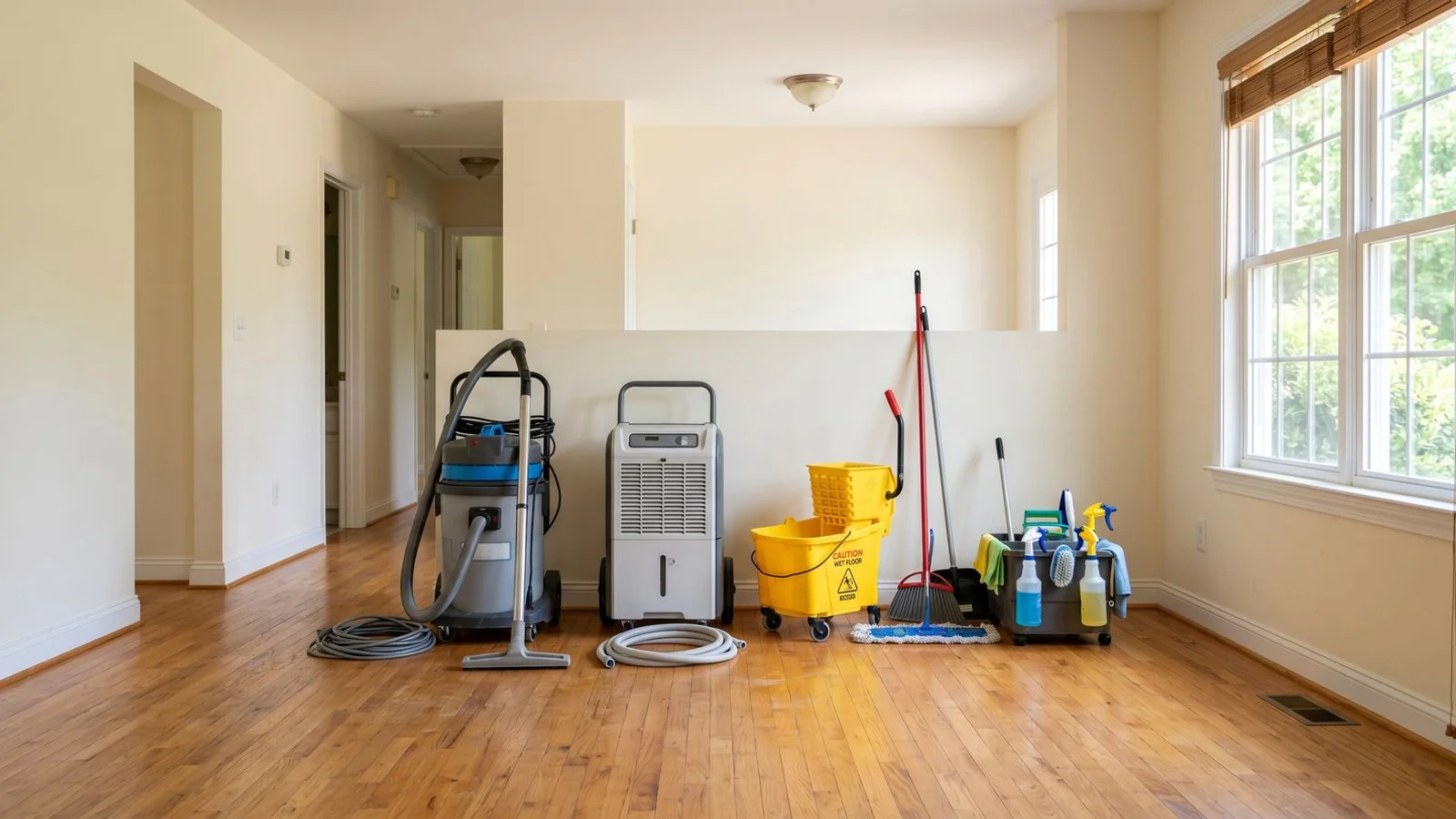
We rely on heavy-duty machinery that goes far beyond what a typical janitorial crew carries. Restoration work demands specific airflow, pressure, and extraction capabilities to remove microscopic threats.
Our standard loadout includes tools specifically built for total extraction and air purification. A basic vacuum simply cannot pull airborne contamination out of a work zone.
- HEPA air scrubbers: These units pull airborne contamination out of the work zone, capturing 99.97 percent of particles down to 0.3 microns.
- Truck-mounted extraction: Professional systems like Rotovac or Prochem handle carpet and upholstery issues that portable units cannot touch.
- Pressure washers: Hard surfaces require specialized cleaning, often utilizing 1600 PSI pumps with adjustable chemistry.
- Foggers: These devices distribute disinfectant effectively throughout confined spaces.
- Hydroxyl generators: This equipment provides safe odor remediation and serves as an excellent chemical-free alternative to ozone machines.
- Surface scrubbers: Heavy-duty counter-rotating brush machines tackle tile, concrete, and large flooring areas.
We make significant capital investments in these tools because operator safety and public health depend on them. This equipment profile clearly separates a certified restorer from a residential service.
Comparing Equipment Standards
| Feature | Standard Maid Service | Restoration Professional |
|---|---|---|
| Air Filtration | Standard HEPA vacuums | 500 CFM HEPA air scrubbers |
| Extraction Power | Portable 120V carpet cleaners | Truck-mounted fuel-powered extraction |
| Odor Treatment | Aerosol sprays or candles | Hydroxyl generators |
| Hard Surface Cleaning | Mops and bucket solutions | 1600 PSI adjustable pressure washers |
Chemical Strength and EPA Registration
We strictly adhere to federal guidelines when selecting cleaning agents for contaminated sites. Restoration work requires EPA-registered disinfectants selected for specific biological or chemical threats.
Our crews frequently pull from the EPA List Q for emerging viral pathogens to ensure complete coverage. These industrial chemicals have documented kill claims for relevant pathogens, tightly controlled concentrations, and mandatory contact-time requirements.
Crucial Disinfection Factors
- Targeted Kill Claims: Products must be proven effective against the exact pathogen on site.
- Monitored Concentration: Dilution ratios must be exact to ensure chemical efficacy.
- Strict Contact Times: The surface must remain visibly wet for a specific duration, often 10 minutes for botanical blends.
We track the chemistry closely throughout the entire project lifecycle. Concentration and pH levels directly affect the final verification results.
Our technicians know that spraying a surface and wiping it off immediately is a guaranteed way to fail an inspection. This deliberate, scientific process is entirely different from the quick spray-and-wipe approach you see in residential cleaning.
Surface-by-Surface Protocols
We never clean a heavily contaminated property by just moving randomly from one room to another. According to the 2026 updates of the ANSI/IICRC S500 standard, proper remediation requires a highly structured approach.
Our teams move systematically, addressing the space surface-by-surface and contamination-tier by contamination-tier. This rigorous process is the only way to prevent cross-contamination during a project.
The 7-Step Remediation Process
- Containment of the affected zone using negative air pressure.
- Loose debris and bulk material removal.
- Pre-clean detergent pass to remove organic soils.
- Disinfectant application with the legally required contact time.
- Wipe, extract, or rinse the surface depending on the specific chemistry used.
- Verification testing using measurable data.
- Move to the adjacent zone only after the current zone passes inspection.
We document every single phase of this process for liability and health safety purposes. This rigor produces verifiable post-clean conditions, allowing professionals to state exactly what was removed, treated, and tested.
Our clients receive objective proof of cleanliness rather than relying on visual confirmation alone. Hard data provides peace of mind when families or employees return to the building.
Attic, Crawlspace, and HVAC Inclusion
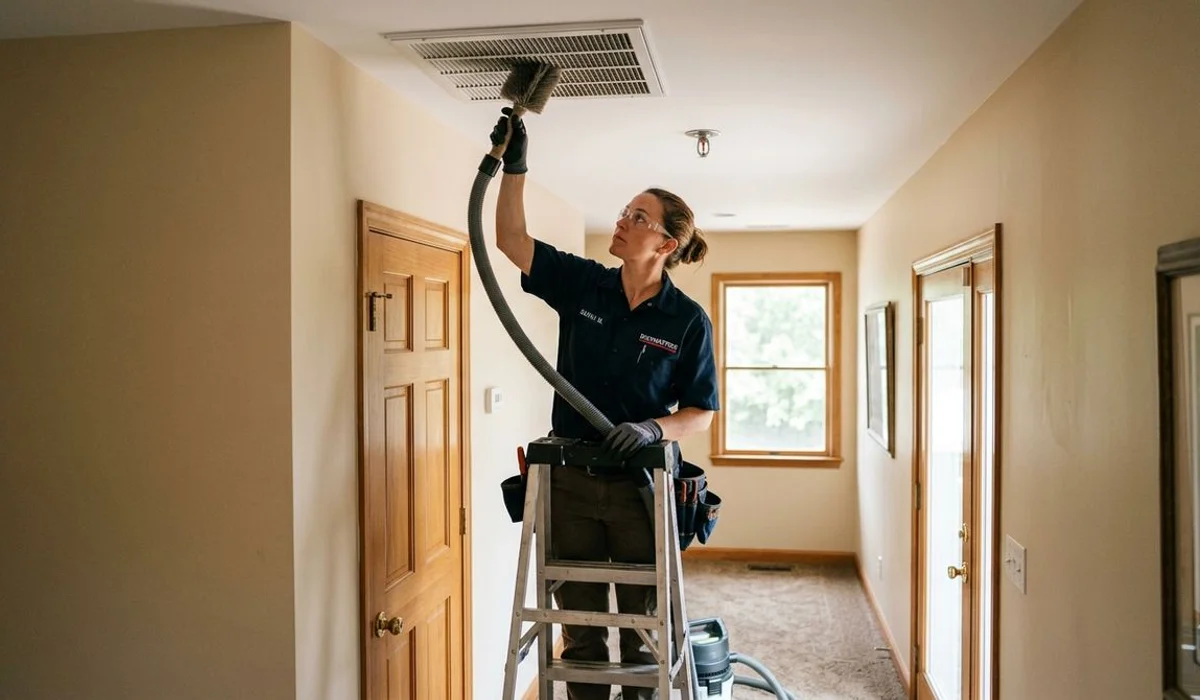
We often find the worst contamination hiding in places property owners rarely check. After heavy cleanups involving hoarding-density issues or biohazards, dangerous particulates and odors easily migrate into hidden structural cavities.
Our damage assessments always include these secondary areas to ensure a complete resolution. Standard cleaning almost never addresses these complex, hard-to-reach zones.
High-Risk Migration Zones
- Attic insulation: Contaminated fibers often require complete removal and replacement to stop recurring odors.
- Crawlspace: These dirt-floor areas need extensive debris removal, specialized sealing, and sometimes full vapor barrier encapsulation.
- HVAC ductwork: Following National Air Duct Cleaners Association guidelines, technicians perform full decontamination and HEPA filter replacement.
- Wall cavities: Inspectors must conduct moisture mapping and air sampling to assess the area for hidden mold or bacterial growth.
We include these spaces in a standard restoration scope because ignoring them guarantees the problem will return. A visually clean living room means nothing if the ventilation system is pumping mold spores back into the air.
Verification Standards
We rely on hard scientific data to prove a building is safe for occupancy. Professional restoration requires objective testing methods to eliminate the guesswork.
Our quality control process utilizes several different metrics to ensure complete pathogen removal. A surface might look spotless to the naked eye while still harboring millions of dangerous bacteria.
Required Testing Metrics
- ATP testing: Hygiena luminometers measure organic residue in Relative Light Units for quick confirmation of cleanliness.
- Surface inspection: A certified technician conducts a visual walkthrough with documented, time-stamped findings.
- Air quality monitoring: Extreme cases require measuring particulate counts and volatile organic compounds.
- Mold-spore sampling: Environmental hygienists collect samples to ensure indoor spore counts match safe outdoor baselines.
- Written summary: Clients receive a detailed report explaining what was done, what was verified, and what fell outside the project scope.
We set strict pass and fail limits for our ATP testing protocols based on industry best practices. A reading under 30 Relative Light Units generally indicates a highly sanitized surface, while anything over 300 is an automatic fail requiring recleaning.
Our team is ready to help you evaluate your property and build a site-specific remediation plan. For odor-specific scope, see odor removal and air quality after cleanup, or visit deep cleaning coordination to schedule an assessment today.