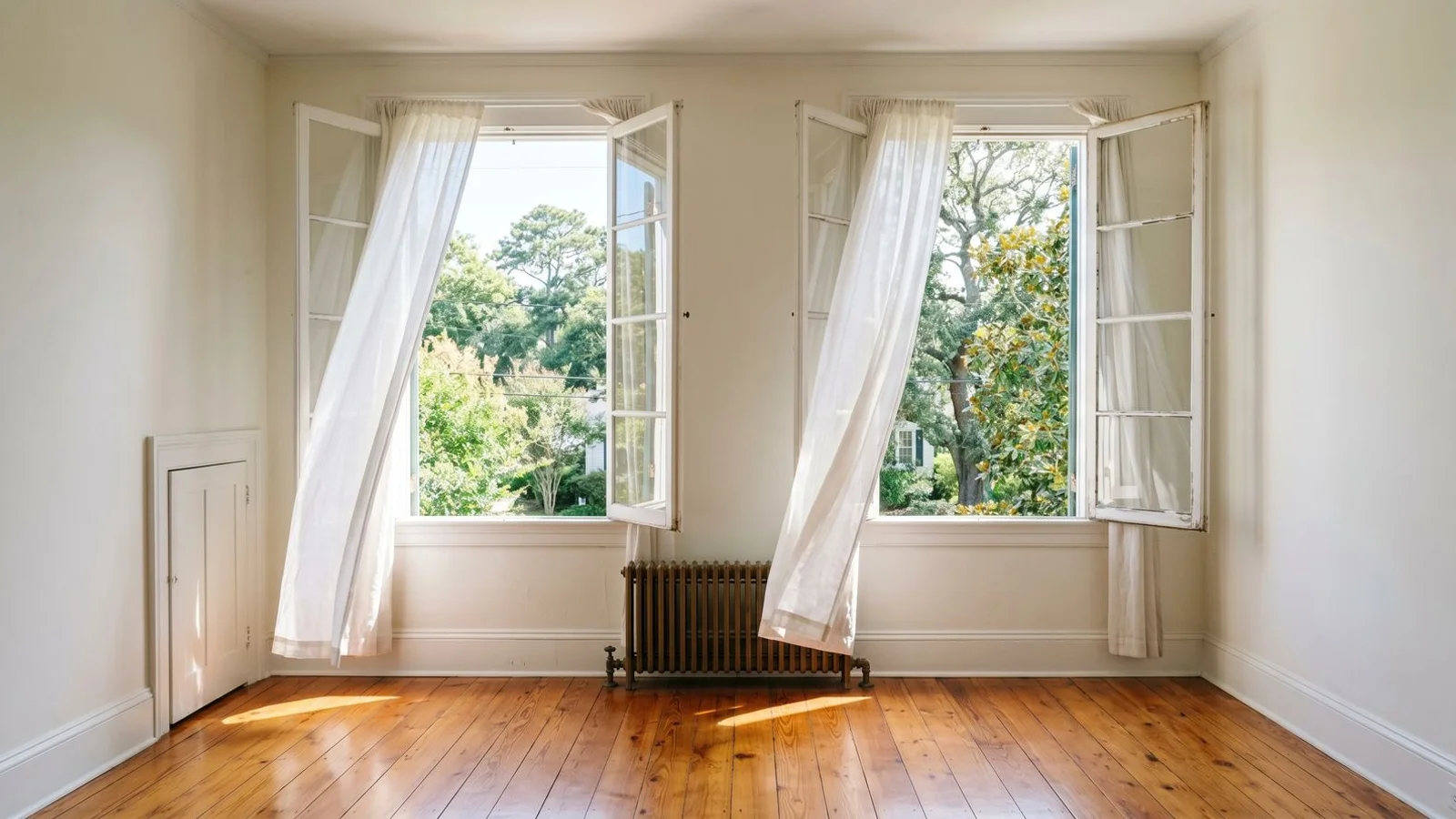
Our team frequently sees that surface-level cleaning rarely solves deep-seated contamination.
From what I have observed, a lingering smell is the main difference between a basic wipe-down and a true restoration. A spotless room means nothing if the actual source is still off-gassing inside a wall cavity.
We are going to walk through the exact steps to achieve total odor removal air quality after cleanup.
This roadmap covers source identification, filtration standards, and when to tear out materials. Let’s look at the data and explore a few practical ways to respond. Most of this work runs through our deep cleaning and sanitization coordinators, who handle the equipment routing and verification step.
Source Identification
Our approach targets the most notorious hiding spots for biological and chemical off-gassing. Identifying the right source is the exact factor that determines whether a cleanup holds or fails completely. Guesswork simply does not work for deep contamination issues.
Most odor sources cluster into five distinct categories. We evaluate each of these materials differently during an inspection.
- Textiles, such as carpets saturated with biohazards, often cost $2 to $8 per square foot to replace in 2026.
- Drywall becomes a massive problem, especially when moisture has migrated into the porous gypsum.
- We see subfloor materials like Oriented Strand Board (OSB) absorb liquid much faster than traditional plywood.
- HVAC components, including the ductwork and evaporator coil, distribute foul smells rapidly.
- Wall cavities harbor severe problems when contamination penetrates past the outer barrier.
Our teams know that cleaning around a contaminated sponge-like material guarantees a failed job. An odor remediation hoarder house project perfectly illustrates this massive challenge. The Institute for Challenging Disorganization uses a five-level Clutter-Hoarding Scale to classify severity.
We rely on these exact metrics to build accurate decontamination plans. Biohazard cleanups in the US currently average between $1,500 and $5,000 precisely because physical source removal is so labor-intensive. Source removal remains the only permanent fix.
HEPA Filtration and Air Quality Work
Air scrubbers equipped with true High-Efficiency Particulate Air filters are mandatory for capturing airborne contaminants during any severe project. Certified units offer the only guaranteed way to scrub microscopic pollutants from the environment.
We run these certified units constantly to protect the air quality after cleanup.
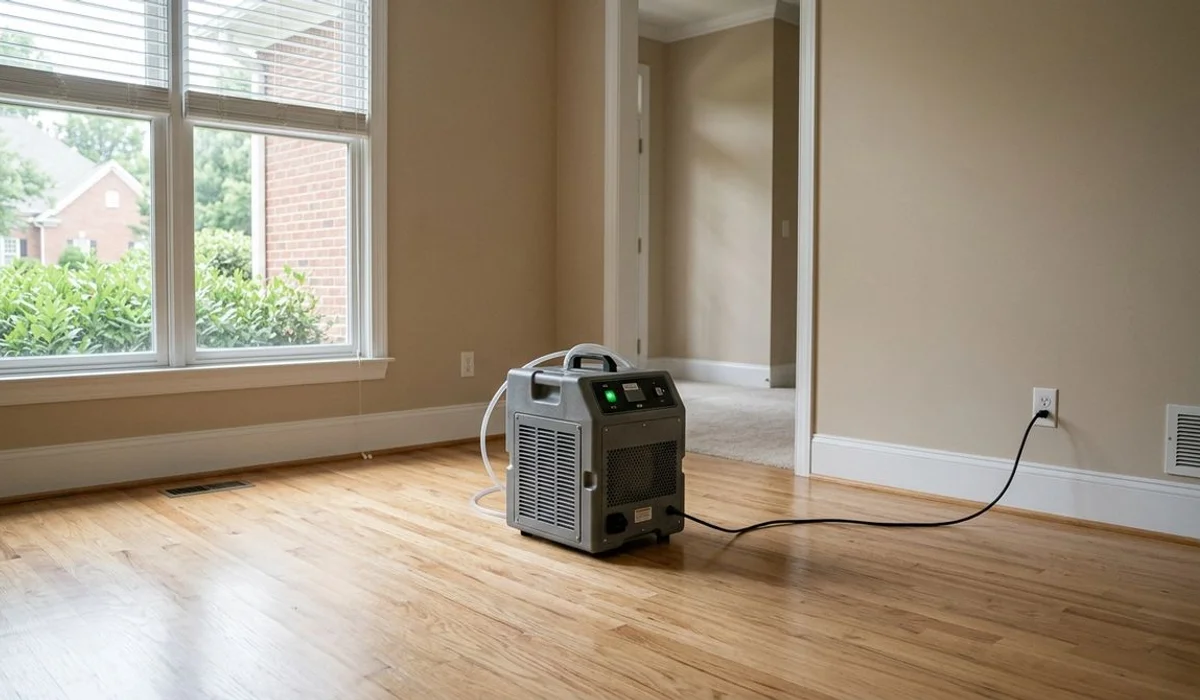
The U.S. Department of Energy (DOE) strictly defines a true HEPA filter as one that removes at least 99.97% of particles at 0.3 microns in diameter.
That 0.3-micron measurement is significant because it represents the Most Penetrating Particle Size (MPPS).
We rely on mechanisms like diffusion and interception to trap particles larger or smaller than 0.3 microns with even higher efficiency. Severe scopes require this verification layer before a building can be safely reoccupied. Particulate counts offer hard data rather than relying on a simple smell test.
Our crews document particulate counts before and after the filtration phase to confirm the environment is safe.
Hydroxyl vs Ozone Treatments
Choosing between these two technologies dictates whether a building must be evacuated or if it can remain occupied. Both methods oxidize volatile organic compounds, but their safety profiles are entirely different. Our preferred method for occupied spaces relies on hydroxyl generators.
Hydroxyl generators produce highly reactive hydroxyl radicals that neutralize odor compounds within milliseconds. They are completely safe to run around people, plants, and pets. We value this gentler chemistry because it preserves sensitive electronics and artwork.
These machines typically require 24 to 72 hours to complete the deodorization process. Ozone generators, on the other hand, flood a room with an aggressive triatomic oxygen molecule. Our teams know ozone works quickly, often neutralizing smells in just 1 to 12 hours.
| Feature | Hydroxyl Technology | Ozone Technology |
|---|---|---|
| Occupancy | Safe for people, pets, and plants | Requires total evacuation |
| Treatment Time | 24 to 72 hours | 1 to 12 hours |
| Material Safety | Safe on electronics and art | Can damage rubber and plastics |
| Regulation | No strict exposure limits | OSHA caps at 0.10 ppm |
The U.S. Occupational Safety and Health Administration (OSHA) strictly caps permissible ozone exposure at 0.10 parts per million (ppm) over an eight-hour period. The home must be completely empty during treatment, with a mandatory outgassing time of 8 to 24 hours afterward. We limit ozone use specifically to vacant buildings where deep structural penetration is required.
Ozone can cause permanent damage to natural rubber, certain plastics, and delicate fabrics. Most Carolinas providers default to hydroxyls unless a situation specifically demands ozone.
What Survives a Clean and What Doesn’t
We use a strict criteria to decide what stays and what goes to the landfill. Determining what materials can be salvaged depends entirely on their porosity and the severity of the contamination. Cleaning a heavily saturated material is essentially impossible and guarantees the smell will return.
Our standard procedure separates building materials into two clear categories.
Usually survives:
- Tile, ceramic, and glass boast zero porosity.
- Hardwood flooring easily survives when the contamination is strictly surface-only.
- We find painted drywall survives assuming the paint created a solid vapor barrier.
- Most upholstered furniture can be saved if treated with professional extraction immediately.
- Sealed concrete blocks odor penetration completely.
Usually doesn’t survive:
- We discard carpet and padding immediately after heavy biological contamination.
- Drywall fails the moment moisture and biological matter overlap.
- Subflooring saturated with pet waste or human fluids requires complete replacement.
- We remove HVAC ductwork coated in heavy smoke particulate to prevent fire risks.
- Mattresses never survive any significant contamination event.
- Insulation holds odors forever following any biological exposure.
We know that total removal of these compromised items is the only valid source-removal step. Returning odors happen most frequently when someone tries to clean around a contaminated sponge-like material. True restoration demands full replacement of porous items.
When Materials Must Be Removed
The decision to tear out building materials follows a rigid, logical progression. Guesswork has no place in structural decontamination. We rely on a standardized decision tree to evaluate every contaminated zone.
- Is the contamination on the surface only? A surface clean with EPA-registered disinfectants may suffice.
- Has the source migrated into porous materials? Remove and replace the item completely.
- We note that severe mold remediation in the US often runs between $1,500 and $6,000 because porous drywall must be discarded.
- Is the structural integrity affected? Remove, replace, and then verify with particle counters.
- Has the HVAC carried particulate through ductwork? Decontaminate the metal lines or replace flexible ductwork entirely.
We recommend escalating the response when standard deep cleaning protocols hit a wall. For escalation guidance when a standard job fails, see when deep cleaning isn’t enough. You can also visit our resource on deep cleaning coordination for complex property challenges.
Our team is ready to help you achieve lasting odor removal air quality after cleanup. Schedule a full structural inspection with us today to permanently eliminate recurring smells. Don’t let hidden contaminants ruin your property value.