You probably know how overwhelming a major clearing project feels. We see families freeze up because they simply cannot picture a clear path forward.
Breaking the operation down into a predictable sequence removes that paralyzing fear.
Knowing the exact hoarding cleanup process step by step helps you plan around the work. Families can coordinate time off, manage their emotional energy, and decide who needs to be present.
Stage 1: Confidential Intake
A private phone conversation usually happens within one business day of reaching out. We listen carefully, ask specific questions about the property, and confirm what kind of help fits your situation.
Intake data from 2026 shows that an adult child or relative makes the initial call in a vast majority of US cases. Bringing in professional help can feel intrusive to the resident.
Our team focuses strictly on facts and safety rather than judgment during this initial chat. This approach creates a foundation of respect before any commitments are made.
Stage 2: On-Site Assessment
A vetted Carolinas provider visits the property to document the physical scope of the project. We often run a video walkthrough for out-of-state cases to save the family travel time.
The assessor uses the Institute for Challenging Disorganization Clutter-Hoarding Scale to evaluate the home. This recognized tool grades the interior conditions from Level 1 to Level 5.
| Hoarding Condition | Typical Clutter-Hoarding Scale | Average 2026 US Cost Estimate |
|---|---|---|
| Mild to Moderate | Levels 1 to 3 | $1,000 to $4,000 |
| Severe to Extreme | Levels 4 to 5 | $7,000 to $15,000+ |
Our field estimates match these current market rates. Severe conditions push costs higher if structural damage exists or exits remain blocked.
Pricing locks at this stage before any physical work starts. You receive an honest quote with zero hidden fees.
Stage 3: PPE & Equipment Setup
For Level 3 or higher cleanups, the crew establishes containment zones before any sorting begins. We strictly follow the OSHA Bloodborne Pathogens standard, specifically 29 CFR 1910.1030, to protect everyone on site.
This federal regulation mandates universal precautions when bodily fluids or unknown substances are present.
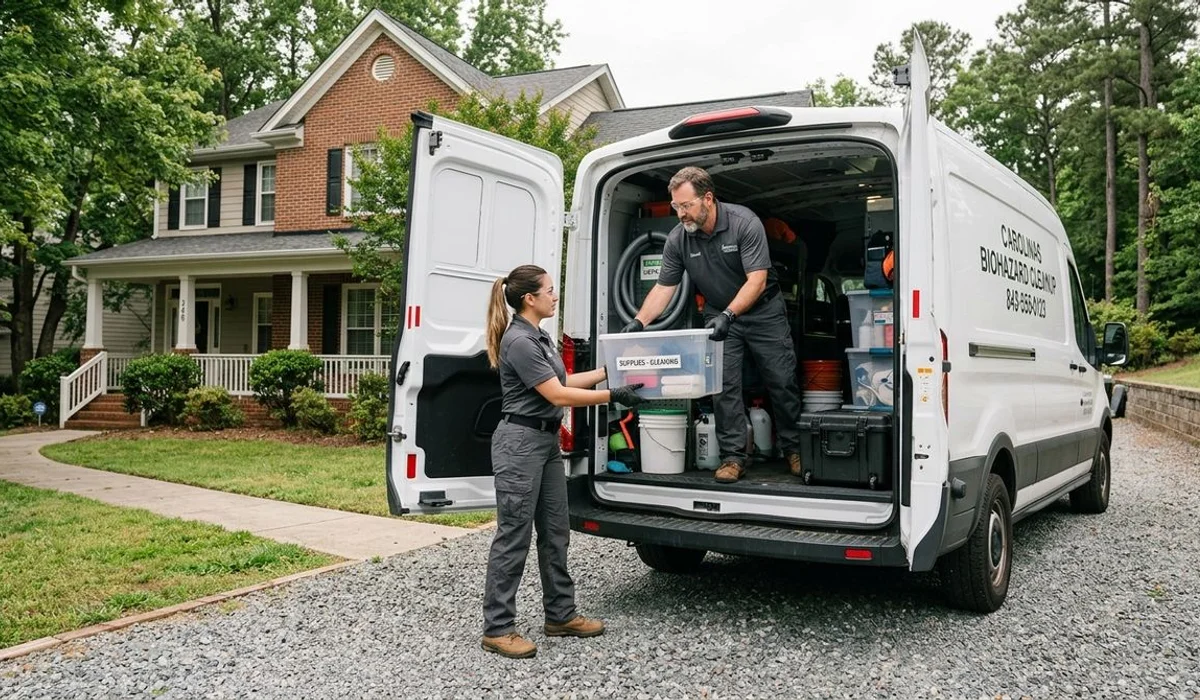
Our technicians suit up with specific personal protective equipment. Machines featuring HEPA filtration run continuously to scrub the air.
These heavy-duty units trap particles as small as 0.3 microns. This immediate air purification makes the environment safer for the sorting phase.
Common protective gear required on site includes:
- Puncture-proof nitrile gloves
- N95 or full-face respirators
- Protective Tyvek suits
- Red biohazard bags for regulated waste
Stage 4: Sort & Categorize
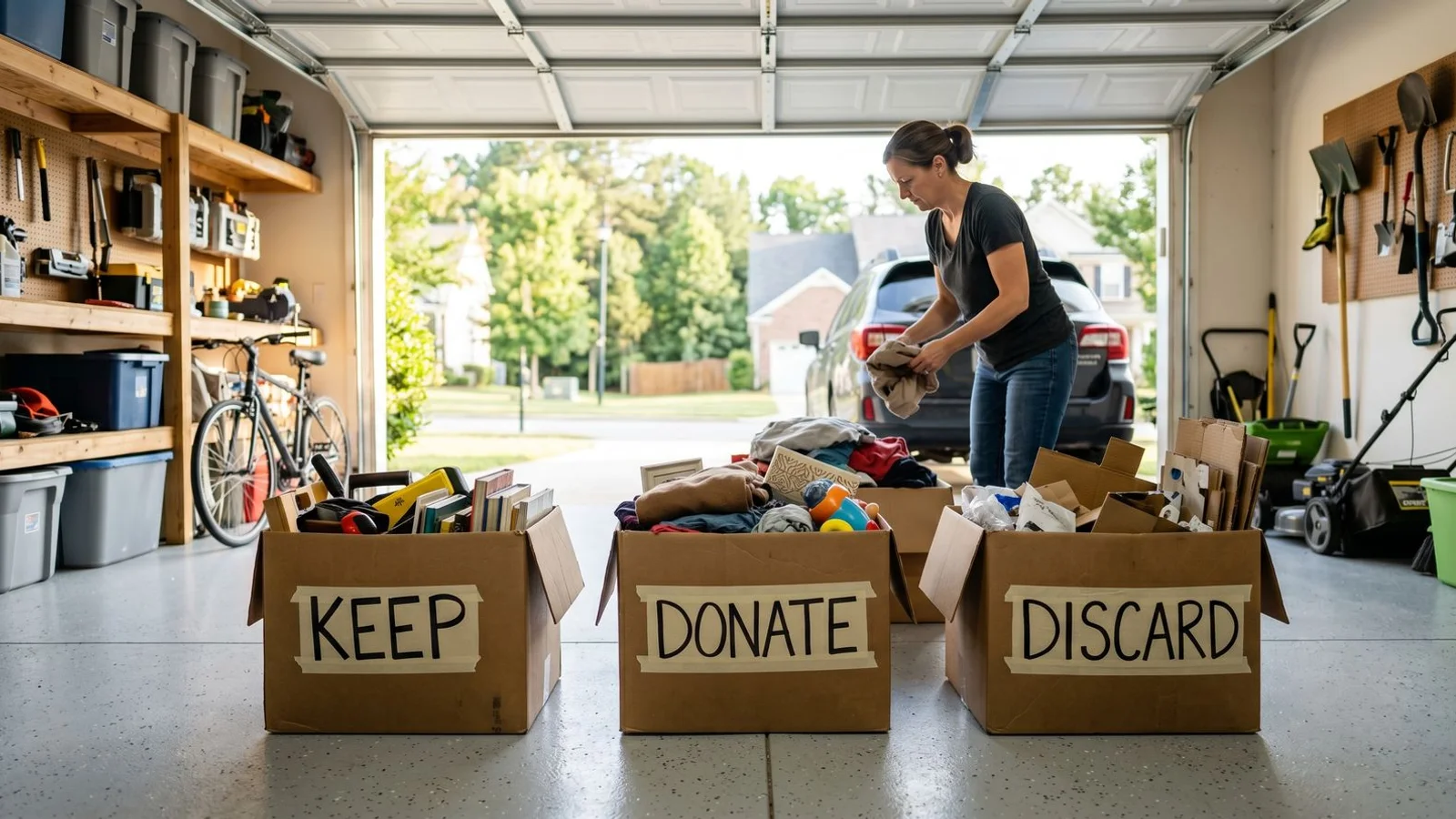
This represents the slow, careful, and human-centered phase of the operation. We categorize every single item into distinct action piles.
The homeowner dictates the pace and participates at every transition.
Items fall into four clear groups:
- Keep: Valuables and daily necessities returned to the homeowner.
- Donate: Usable goods routed to local 501(c)(3) charity partners.
- Discard: Unsalvageable volume headed to the disposal truck.
- Shred: Sensitive paperwork processed following FACTA compliance rules.
Donating items to registered charities allows us to provide you with IRS tax receipts. A separate review pile holds anything ambiguous.
Nothing leaves the property without clear family sign-off on those pending items.
Stage 5: Heavy Debris Removal
Once sorting finishes in a specific zone, the hauling process begins. We coordinate multi-trip projects by truckload to keep the property clear of new piles.
Standard junk removal rates in the US currently average $150 to $350 per load.
Our supervisors route donation runs and shredding runs entirely separate from standard landfill disposal. Separating the waste streams keeps costs down and prevents usable goods from hitting the local dump.
Stage 6: Deep Clean & Sanitization
Restoration-grade deep cleaning starts after the team removes the bulk volume. We focus heavily on surface restoration, odor removal, and improving the ambient air quality.
HVAC systems often trap bioaerosols and require specialized filtration to prevent lingering smells.
The chemistry changes significantly if the scope flags for biohazards. Crews switch to EPA-registered disinfectants designed to neutralize specific pathogens.
Strict verification protocols ensure the environment passes local health and safety standards.
Stage 7: Optional Organizing Handoff
Many families decide to add a professional organizing engagement at this specific point. We highly recommend recurring weekly or monthly visits to help maintain the newly cleared spaces.
Recent psychiatric studies show that the hoarding relapse rate approaches nearly 100 percent without ongoing therapeutic or organizational support.
These follow-up sessions are completely optional. For Level 3 and higher cleanups, this continued support often marks the difference between a temporary fix and a permanent change.
Stage 8: Final Walkthrough
The project concludes with a detailed property inspection. You will walk the cleared rooms with the site supervisor to confirm the final scope of work.
We supply all required provider documentation during this meeting.
This paperwork proves critical if you need to pass a municipal fire code inspection or sell the property. Families also receive their 501(c)(3) donation receipts for their 2026 tax filings.
Where Families Can Stay Involved
Families dictate their exact level of presence during the hoarding cleanup stages. Some households pitch in during the sorting phase, and then step back for the heavy hauling.
We see other clients request full involvement from the first day to the last.
Out-of-state relatives typically rely on phone calls or video chats at major sorting milestones. There is no single right answer for every situation.
The hoarding cleanup timeline naturally adapts to match the family’s comfort level.
When a project involves an inherited property, the operation frequently overlaps with estate cleanout coordination. We sequence these two specialized services together to speed up the process. A coordinated approach gets the home ready for the real estate market, so contact our team today to discuss your property and schedule an assessment.