We hear the exact same two questions during every initial phone call.
Families always ask about privacy first, and then immediately want to know the hoarding cleanup cost in the Carolinas. This response makes perfect sense because clearing a deeply cluttered property feels overwhelming.
Our crews know exactly how hard it is to budget for this type of major residential reset. You need real numbers to make practical decisions about a family estate or rental property.
Let’s look at specific regional price benchmarking for North and South Carolina. The following details will explain the five factors that drive price variation. We will also give you an honest take on why reputable companies refuse to quote a hoarding cleanup sight unseen.
Typical Carolinas Price Ranges by Hoarding Level
We evaluate every property using a standard five-tier severity scale. The final hoarding cleanup price in NC or SC depends entirely on which level applies to your specific home. These general benchmarks reflect current 2026 rates for a single-family residential property.
| Level | Description | Typical Range |
|---|---|---|
| Level 1 | Mostly organized, light clutter | $400 - $1,200 |
| Level 2 | Visible clutter, some unused rooms | $1,000 - $2,500 |
| Level 3 | Heavy clutter, structural items blocked | $2,000 - $5,500 |
| Level 4 | Hazardous conditions, sanitation issues | $4,500 - $12,000 |
| Level 5 | Severe biohazard, structural concerns | $8,000 - $25,000+ |
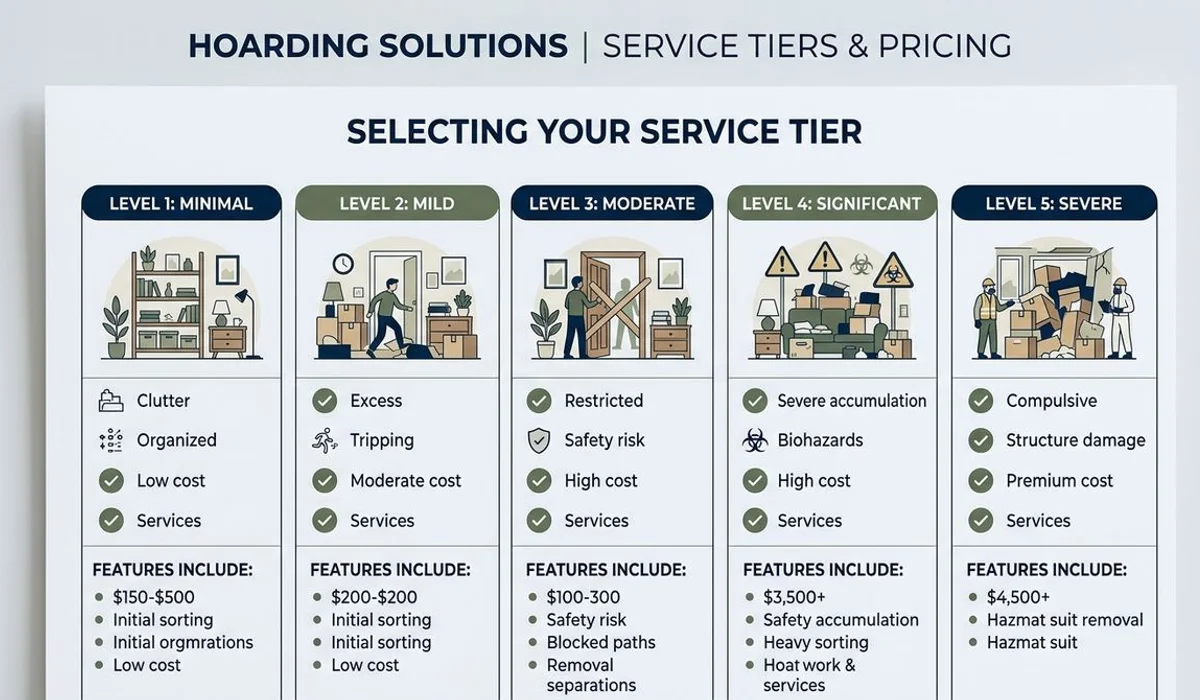
Our project managers find that Level 3 and Level 4 situations are the most common calls we receive. The jump in price at those stages reflects the intense labor required to clear blocked pathways. Local disposal fees also push those higher tier prices up significantly. You must factor in these municipal costs, as Mecklenburg County currently charges up to $61 per ton for mixed municipal solid waste disposal in 2026.
The 5 Cost Drivers
We base every estimate on five specific site conditions. A clear understanding of these variables helps you anticipate the final bill.
1. Volume
Our pricing model relies heavily on total debris volume. Truckload counts and dumpster rental fees directly dictate the final labor and disposal expenses. A standard 30-yard roll-off dumpster in Charlotte averages $500 to $575 per week in 2026. You will also pay weight overage fees of $50 to $100 per ton if the bins get too heavy.
2. Biohazard presence
We must implement strict safety protocols when animal waste or gross filth is present. Unattended death residue or heavy pest infestations require specialized personal protective equipment.
Common biohazards that trigger premium disposal rates include:
- Untreated animal waste
- Black mold
- Medical sharps or needles
Our crews handling these materials must meet OSHA bloodborne pathogens standards. Regulated medical waste disposal centers charge premium rates to process these hazardous materials.
3. Access
We need to know exactly how close we can park our trucks to the front door. Long walks down narrow apartment hallways drastically increase the total labor hours required. Western North Carolina properties often feature steep gravel driveways with grades over 15 percent. These mountain access issues mean we must use smaller box trucks instead of high capacity dumpsters.
4. Distance from disposal
Our routing software factors in the driving time between your property and the nearest commercial landfill. Urban centers like Charlotte and Charleston feature excellent, close by disposal infrastructure.
Pro Tip: Projects near Charlotte can easily utilize the Foxhole Landfill or the Speedway facility to keep turnaround times and transport fees low.
Rural cleanups often involve long hauls that add fuel costs and hours to the project.
5. Sort complexity
We usually need to help clients find important documents hidden among the clutter. A simple haul-everything job moves quickly and costs much less. Finding and documenting valuables takes intense focus and slows down the entire physical process. Estate cleanouts frequently uncover uncashed checks, stock certificates, and family heirlooms buried under decades of belongings.

NC vs SC
Our estimators see very similar baseline pricing across both states. Small variations exist due to local landfill structures and the density of service providers. The specific hoarding cleanup cost in SC often depends on the city. Charleston cleanups run slightly higher because mold remediation is almost always required in that humid coastal environment.
We find that Greenville tends to have slightly lower prices than major North Carolina metros due to a highly competitive local services market. Our North Carolina estimates must also account for a mandatory state tax. The North Carolina Department of Revenue enforces a Solid Waste Disposal Tax of $2.00 per ton on all landfill drop offs. These small regulatory differences add up on a massive Level 5 project.
Payment Options
We want to ensure you have clear paths to fund this necessary work. The most common payment method for non-biohazard work is simply paying out of pocket. Property owners do have other avenues available for larger projects.
Here are the standard funding methods we see in the field:
- Out of pocket: Credit cards or bank transfers work best for Level 1 and Level 2 jobs.
- Insurance: Coverage sometimes applies when a covered peril applies.
- Estate funds at closing: Probate driven cleanouts can often be paid from the sale of the house.
- Financing: Local credit unions like SECU offer personal loans, and medical credit lines like CareCredit can sometimes assist.
Why Sight-Unseen Quotes Are a Trap
We never provide a binding estimate without physically walking through the property. A quote generated over the phone is just a wild guess. Bad actors use this marketing tactic to lock you in with an artificially low number. Those same companies will then increase the bill by 40 to 50 percent once their trucks are half full.
Our project estimators prefer to do things the right way. Honest Carolinas providers always visit the property first to map out the logistics. Taking 30 minutes for an on-site assessment usually saves families thousands of dollars in mid-job surprises.
You can find more detailed information by checking out the estate cleanout cost guide for probate specific pricing. Families dealing with property damage should also review whether homeowners insurance covers hoarding cleanup to determine their next steps.