Many property owners know the frustration of hiring a hauling service only to have the crew walk away from half the pile.
That disconnect usually happens when the actual debris does not match the quoted junk removal scope. We see this happen constantly with complex cleanouts.
Knowing exactly what junk removal includes separates a smooth project from a costly headache.
This guide spells out what is typically covered, what is rejected, and where to expect surcharges. You will learn how to accurately assess your property needs before making a single call.
Standard Inclusions: What Junk Removal Includes
Standard junk removal covers everyday bulky items, general household trash, appliances, and basic yard waste. This means any standard debris that a two-person crew can safely lift and load into a truck is typically included.
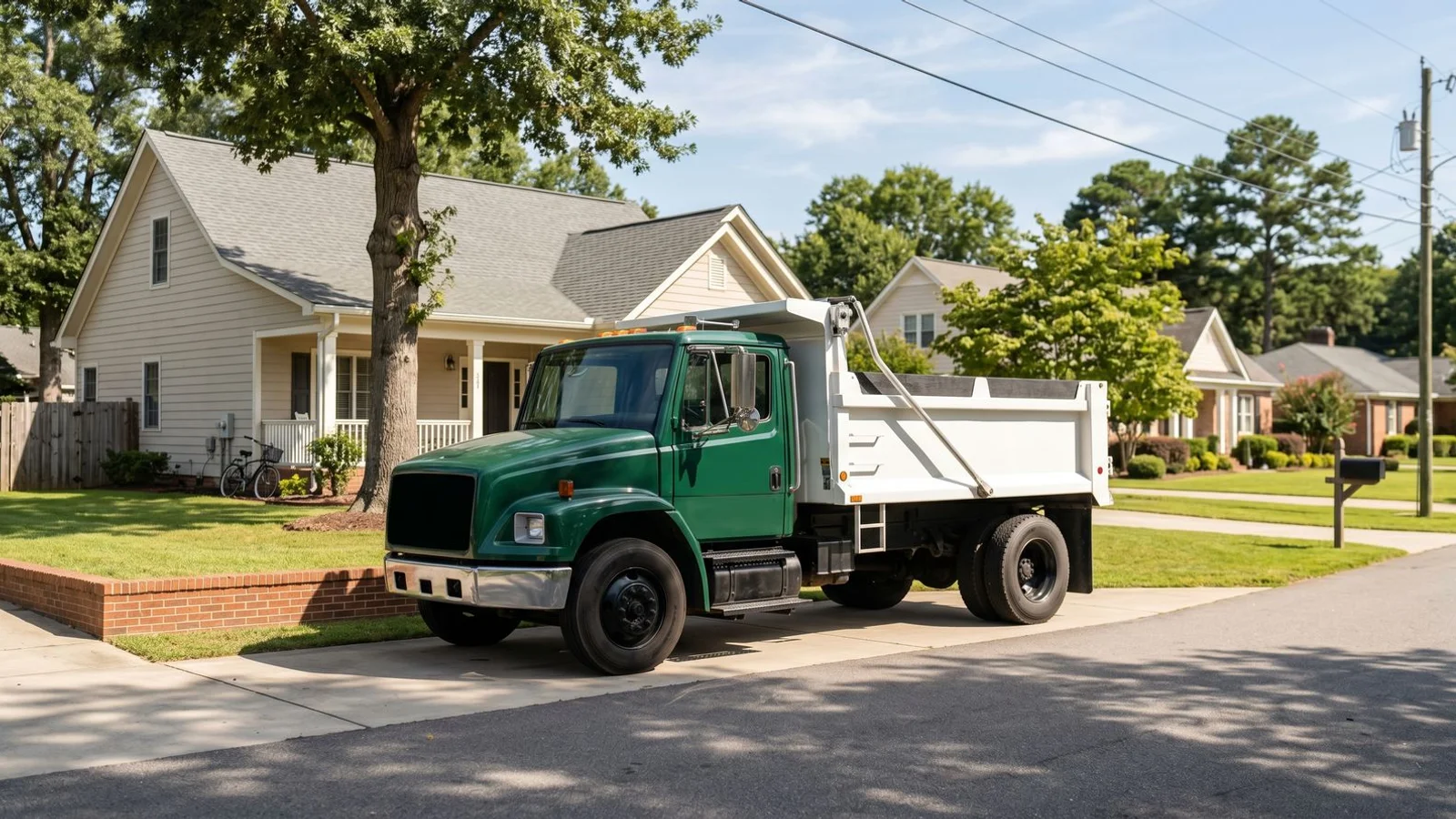
Our teams use trucks that hold 14 to 16 cubic yards of material. That space fits about six pickup truck loads of debris. U.S. national averages show a full truckload of these standard items costs between $400 and $800 in 2026.
Here is a breakdown of what junk removal covers on a normal job:
- Furniture: Couches, chairs, tables, beds, and dressers are simple to load.
- Appliances: Refrigerators, washers, and dryers are included. The EPA Responsible Appliance Disposal (RAD) program guidelines require recovering 90 percent of refrigerants, which often triggers an appliance disposal fee.
- Mattresses: Haulers normally include mattresses. Carolinas markets usually route these directly to mattress recycling facilities.
- E-waste: Old TVs, monitors, and electronics are accepted. Most local transfer stations charge a $20 to $200 recycling fee for these items, which gets passed along to the customer.
- General household debris: Bagged trash, moving boxes, and broken household goods go straight into the truck.
- Yard and construction waste: Light branches and small remodel cleanups are usually scoped for regular pickup.
Standard Exclusions
Standard junk removal excludes hazardous materials, biological waste, extremely heavy materials at scale, and items requiring specialty equipment. Haulers must reject these items because regular transfer stations will not accept them without specific municipal permits.
We often get calls to remove old paint or chemicals, but standard crews cannot legally transport them. Facilities in the U.S. charge hazardous dumping fees ranging from $0.80 to $4.00 per pound.
Homeowners must use specific community drop-off days or programs like PaintCare for wet paint disposal. Keep these common exclusions in mind:
- Hazardous waste: Paint, solvents, automotive fluids, and batteries require special handling.
- Biohazard: Anything with biological contamination needs a certified remediation crew.
- Heavy materials at scale: Concrete, large-volume rock, and dirt are too heavy. A truck reaches its maximum weight limit long before the cubic yardage is full.
- Hot tubs: Removing a hot tub usually requires specialty crews and demolition equipment.
- Pianos: Most regular providers do not carry the specific dollies and strapping equipment for safe piano handling.
- Sort-with-dignity items: Anything requiring careful, compassionate sorting should be handled by specialized cleanup teams instead.
Accessibility Constraints
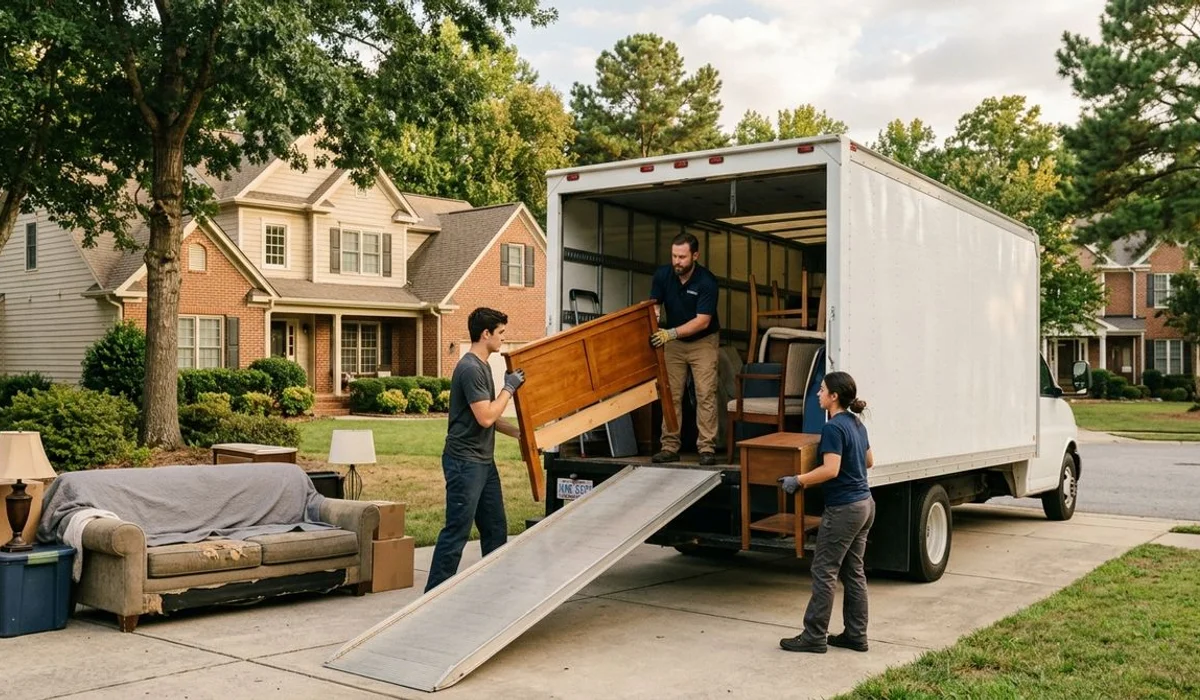
Most junk removal pricing assumes your items are easily accessible from the curb or driveway. When debris is deep inside a building or located up multiple flights of stairs, haulers apply accessibility surcharges to cover the extra labor time.
Our pricing models factor in the time it takes to walk from the staging area to the truck. Carrying heavy items requires immense physical effort.
Moving a bulky couch down a narrow hallway forces a two-person crew to slow down to prevent property damage. You can avoid extra fees by bringing items out to the garage beforehand.
Expect extra charges in these specific scenarios:
- Stairs: Crews typically apply a surcharge per flight of stairs.
- Long carries: Moving items from a staging area to a truck over 30 feet away adds a labor fee.
- Narrow halls or doorways: If furniture requires disassembly to fit through a door, that time adds to your total cost.
- Upper-floor condos: Jobs requiring freight elevator scheduling and concierge sign-in will cost more.
Always mention these constraints during the intake call so the dispatched crew is sized appropriately.
Multi-Trip Projects
Larger cleanouts that will not fit into a single 15-cubic-yard truck require scheduling across multiple trips. Pricing for these massive projects is usually calculated per truckload plus a small coordination cost.
We typically evaluate the total volume during the initial walkthrough. A standard truck holds about the same amount as a single, large bedroom filled to the brim.
If a property contains more than 40 cubic yards of debris, dispatching three or more truckloads becomes expensive. The math often tips toward a different solution at that scale.
You might save money by securing a large 40-yard roll-off dumpster, which averages around $380 to $800 per week in 2026. For overwhelming properties, utilizing hoarding cleanup coordination provides better value and faster results.
| Disposal Method | Best Use Case | Typical 2026 U.S. Cost |
|---|---|---|
| Standard Junk Removal | Quick, hands-off clearing of bulky items | $400 - $800 per 15-yard truck |
| Roll-Off Dumpster (40-Yard) | DIY loading over several days | $380 - $800 per week |
| Hoarding Coordination | High-density, extreme volume cleanouts | Custom scoped |
Donation Handling
Reputable Carolinas providers route gently used items to 501(c)(3) charity partners before taking anything to a disposal facility. This approach keeps usable furniture out of landfills and benefits the local community.
Our teams sort items carefully to separate salvageable goods from absolute trash. The crew evaluates pieces based on charity acceptance guidelines:
- Usable Furniture: Routed to local 501(c)(3) partners.
- Worn Mattresses: Sent to dedicated mattress recycling routing in Carolinas markets.
- Broken Items: Head directly to standard disposal facilities.
You can request donation receipts for your records. This documentation is highly useful for tax purposes if you are approaching the IRS donation thresholds.
For the 2026 tax year, keeping a proper paper trail allows itemizing taxpayers to deduct the fair market value of donated property.
When the Job Is Bigger Than It Looks
If the crew realizes during the walkthrough that the property requires extreme sorting, they will pause the operation. Standard hauling crews are not equipped or legally certified to handle severe contamination.
Our intake team steps in to reassess the property when a crew raises a red flag. Dispatchers watch for these specific project escalations:
- Hoarding-Density: Floor-to-ceiling debris requiring a coordinated, multi-day clear out.
- Biohazard-Flagged: Animal waste, mold, or biological contamination.
- Sort-Heavy Conditions: Extreme clutter requiring compassionate, item-by-item sorting.
Pushing the wrong scope through a standard hauling service puts workers at risk and violates safety regulations. The staff cross-routes the project to the correct specialty tier instead of forcing a dangerous fit.
For severe cases involving biological waste or structural damage, you need trained remediation experts wearing proper protective gear. For more on this specific scenario, see when junk removal isn’t enough.
Understanding what junk removal includes helps you prepare your property and budget accurately.
Take the time to assess your debris volume today.
If you are unsure about a specific item, call your local provider to confirm their exact junk removal scope before the truck arrives.